| Major Groups > Gilled Mushrooms > Rhodotus palmatus |

|
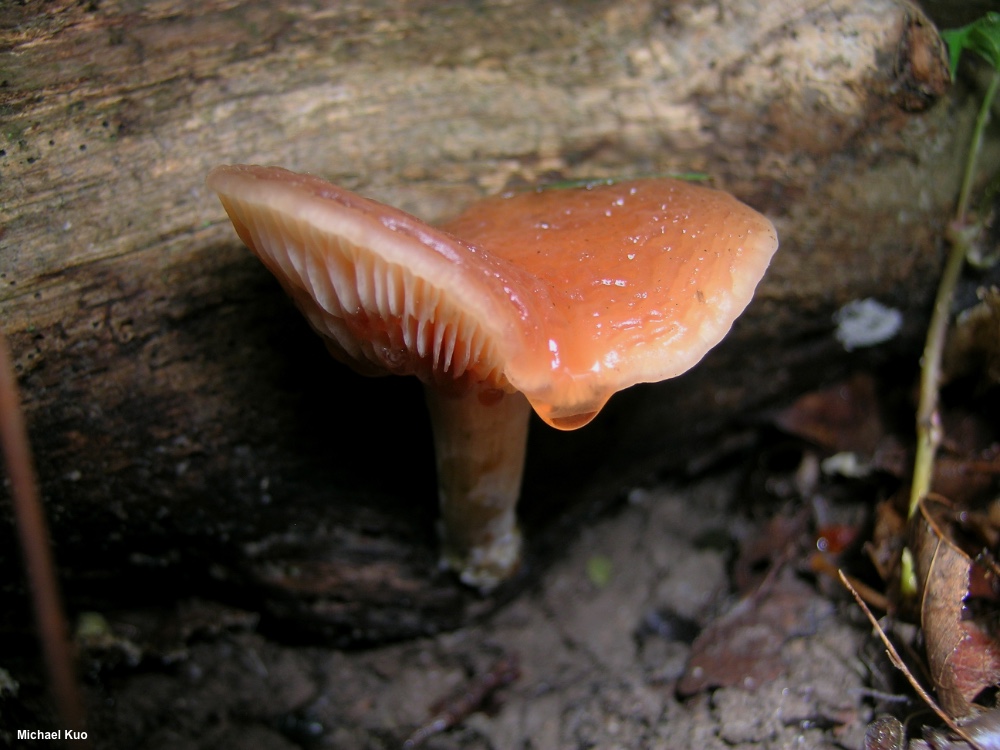
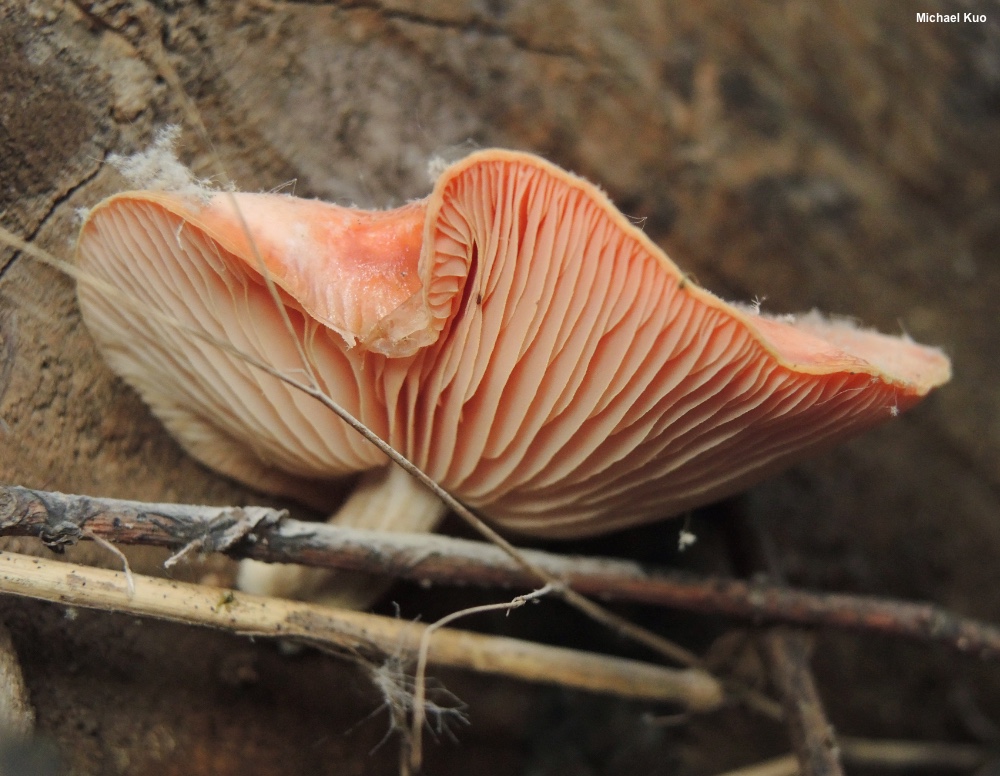
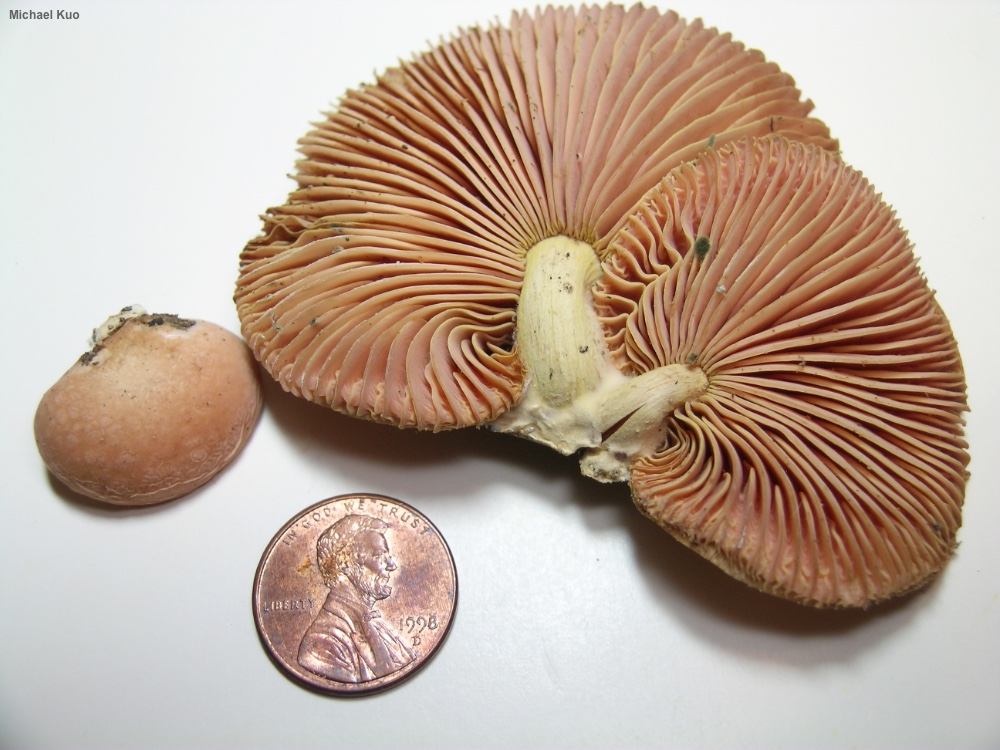
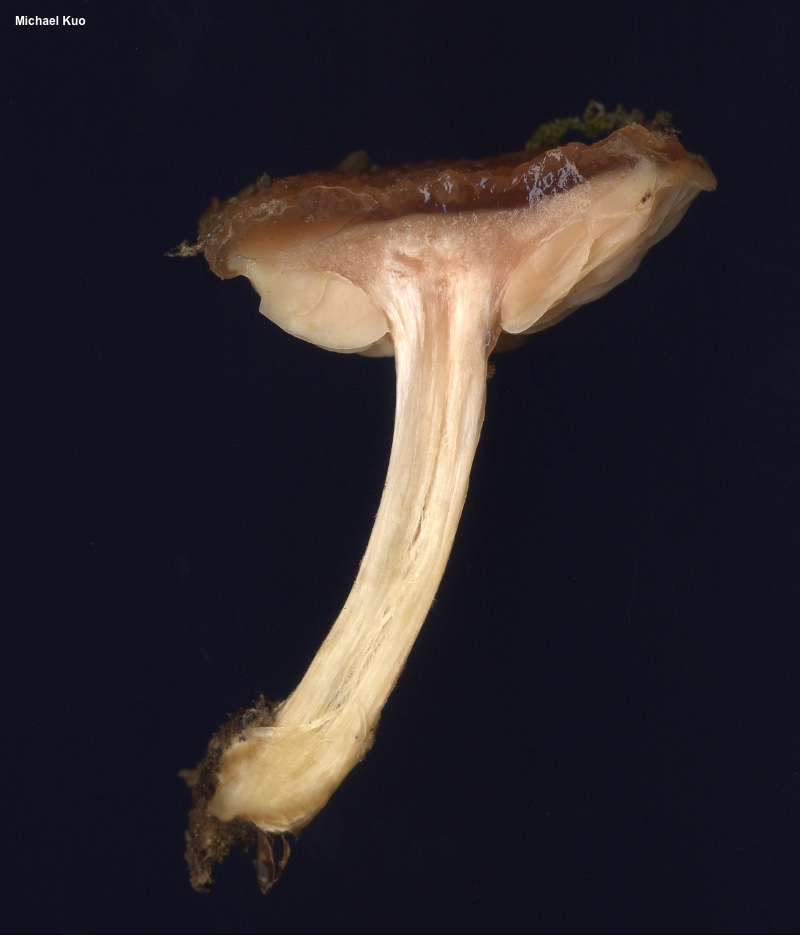
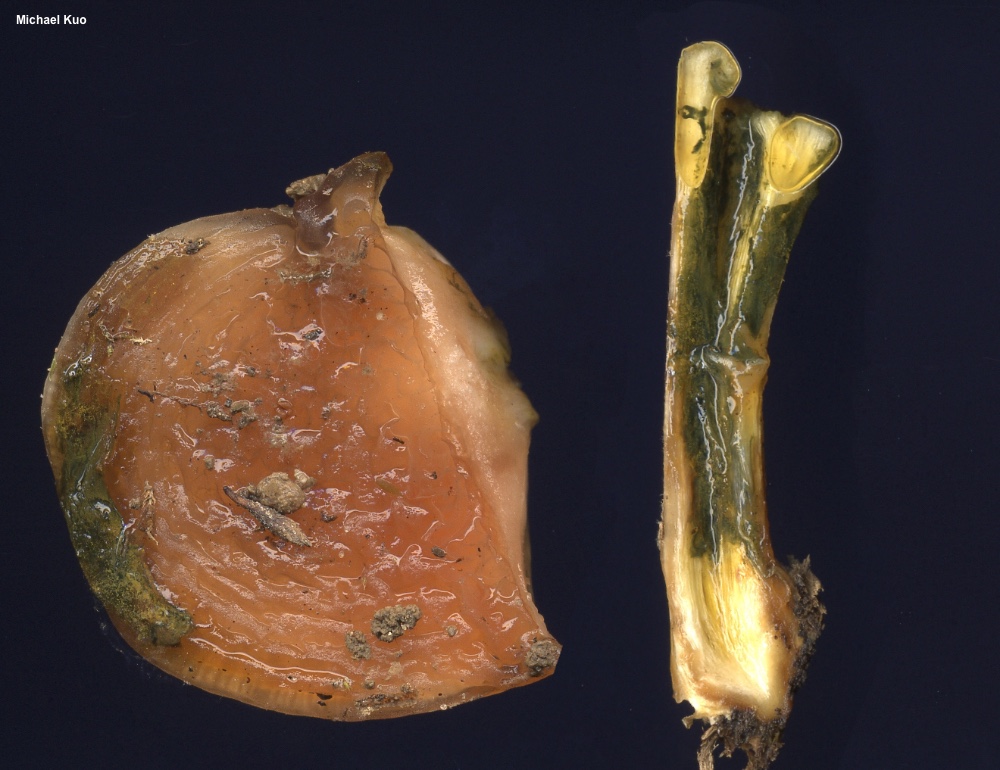
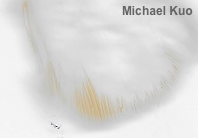
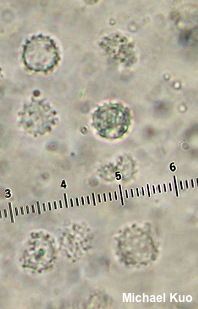
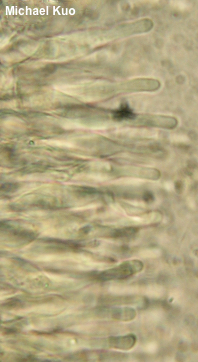
Rhodotus palmatus [ Basidiomycota > Agaricales > Physalacriaceae > Rhodotus . . . ] by Michael Kuo When it's being picturesque, Rhodotus palmatus is a stunning and unmistakeable mushroom—or so they tell me. I wouldn't know, since I only find it looking as though it has a droopy, slimy hangover, or looking like a cheap imitation of the masterpiece collections depicted in field guides. In its oft-photographed state the cap features a dramatic, reticulate pattern of whitish ridges and veins, contrasting with the deep reddish orange cap color. But Rhodotus palmatus can also be found (more commonly, if my experience is indicative) without these ridges, or with non-contrasting, less conspicuous ridges, at which point identification can be more challenging: look for the thick and rubbery flesh, the dull orangish color, and the habitat on well-decayed, wet wood in stream beds and lowlands from the Great Plains eastward. Description: Ecology: Saprobic; growing alone, scattered, or in troops or loose clusters on the wet, well-decayed wood of hardwoods; late spring through fall; originally described from France; widely distributed in North America east of the Great Plains; also distributed in Europe and Asia. The illustrated and described collections are from Illinois. Cap: 3–8 cm across; convex when young, becoming broadly convex or nearly flat; sticky when fresh; bald; netted with a reticulate pattern of whitish ridges and veins—or without veins and ridges; pinkish orange to pale peach. Gills: Attached to the stem; close; short-gills frequent; whitish when young, becoming pale peach to pink with maturity. Stem: 10–40 mm long; 3–10 mm thick; often off-center; equal; whitish to pinkish or pale brownish; bald; basal mycelium white. Flesh: Whitish; unchanging when sliced; rubbery and gelatinous. Odor and Taste: Not distinctive. Chemical Reactions: All surfaces instantly dark gray to green with iron salts; negative with KOH. Spore Print: Whitish in a thin print; pinkish to pale yellow in a thick print. Microscopic Features: Spores 5–7.5 x 4–7.5 µm (including ornamentaion); subglobose to broadly ellipsoid; spiny with rod-like spines 0.5–1 µm long; hyaline in KOH; inamyloid. Basidia 30–37.5 x 6–7.5 µm; subclavate; 4-sterigmate. Cheilocystidia 30–55 x 2.5–5 µm; fusiform to narrowly lageniform; smooth; thin-walled; hyaline in KOH. Pleurocystidia not found. Pileipellis an easily disarticulating hymeniform layer of clavate elements 28–38 x 7.5–12.5 µm, smooth, hyaline in KOH—interspersed with cystidioid elements 25–75 x 5–7.5 µm, fusiform to lageniform or irregular, smooth, hyaline in KOH. REFERENCES: (Bulliard, 1785) Maire, 1926. (Fries, 1821; Kauffman, 1918; Smith, Smith & Weber, 1979; Phillips, 1981; Lincoff, 1992; Horn, Kay & Abel, 1993; Noordeloos, 1995; Sundberg, Methven & Monoson, 1997; Barron, 1999; McNeil, 2006; Miller & Miller, 2006; Kuo & Methven, 2010; Buczacki et al., 2012; Kuo & Methven, 2014; Vesterholt, 2018; Læssøe & Petersen, 2019; McKnight et al., 2021.) Herb. Kuo 05280403, 09211202, 10191602, 06061803. This site contains no information about the edibility or toxicity of mushrooms. |
© MushroomExpert.Com |


|
Cite this page as: Kuo, M. (2021, March). Rhodotus palmatus. Retrieved from the MushroomExpert.Com Web site: http://www.mushroomexpert.com/rhodotus_palmatus.html |