| Major Groups > Boletes > Gyroporus > Gyroporus smithii |

|
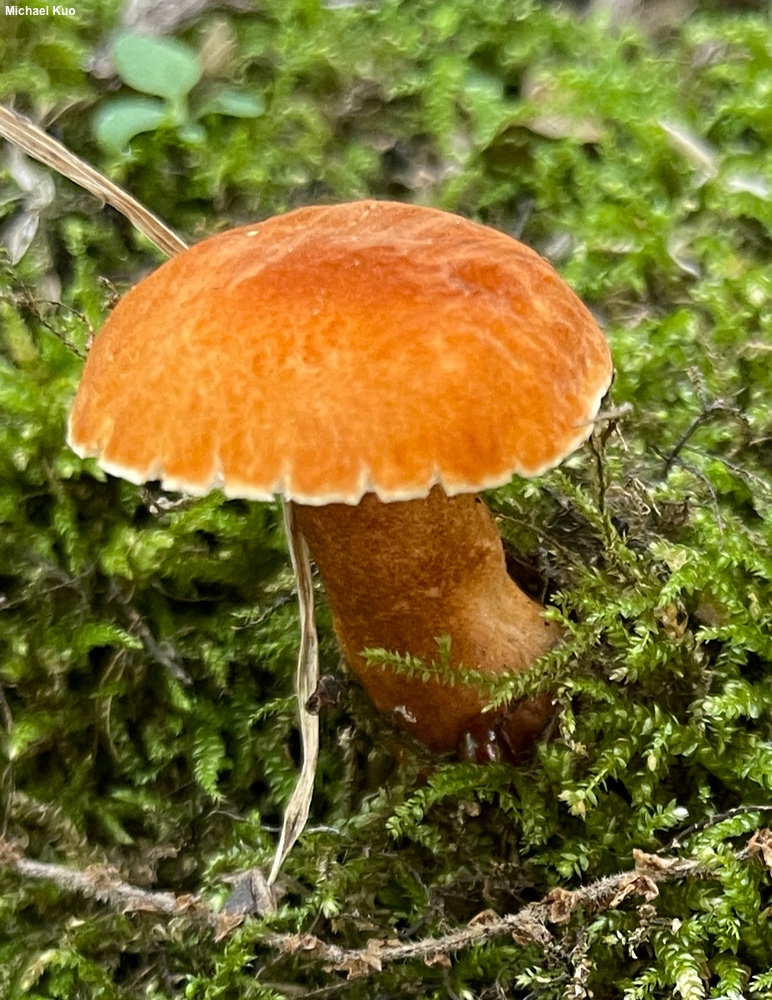
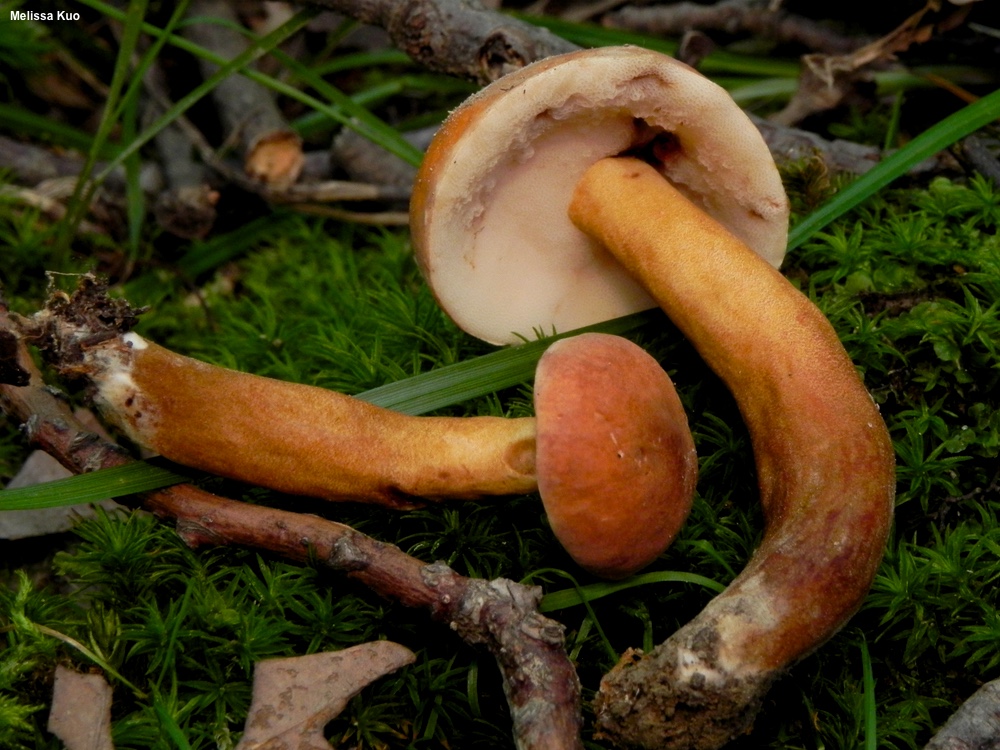
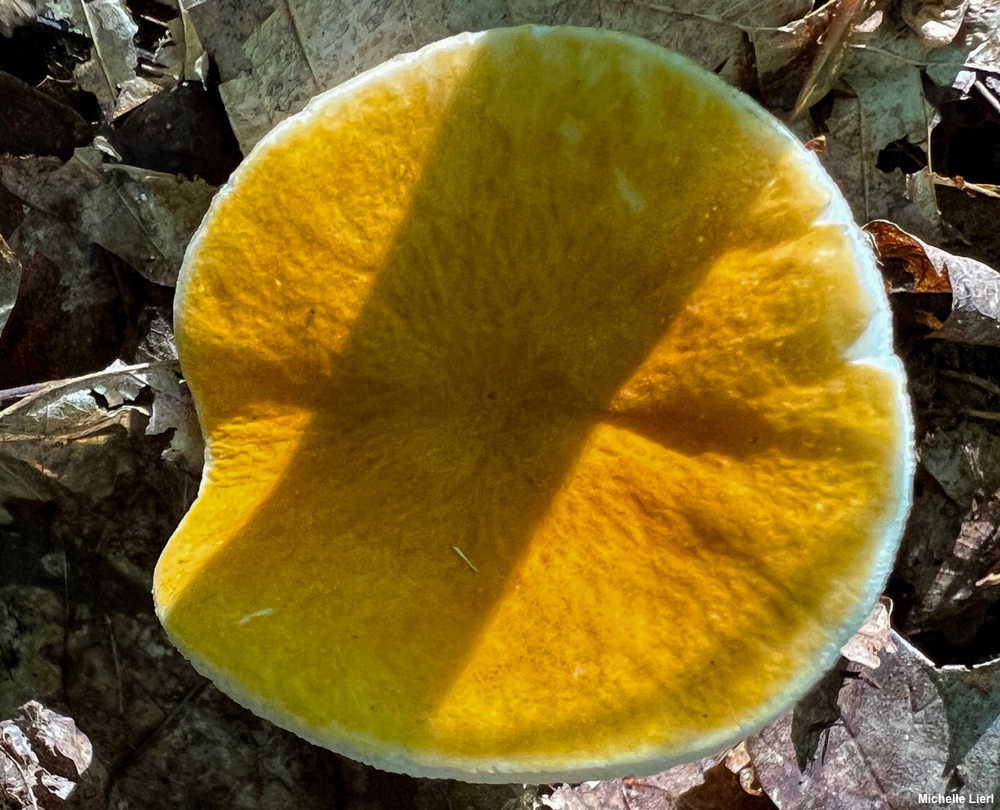
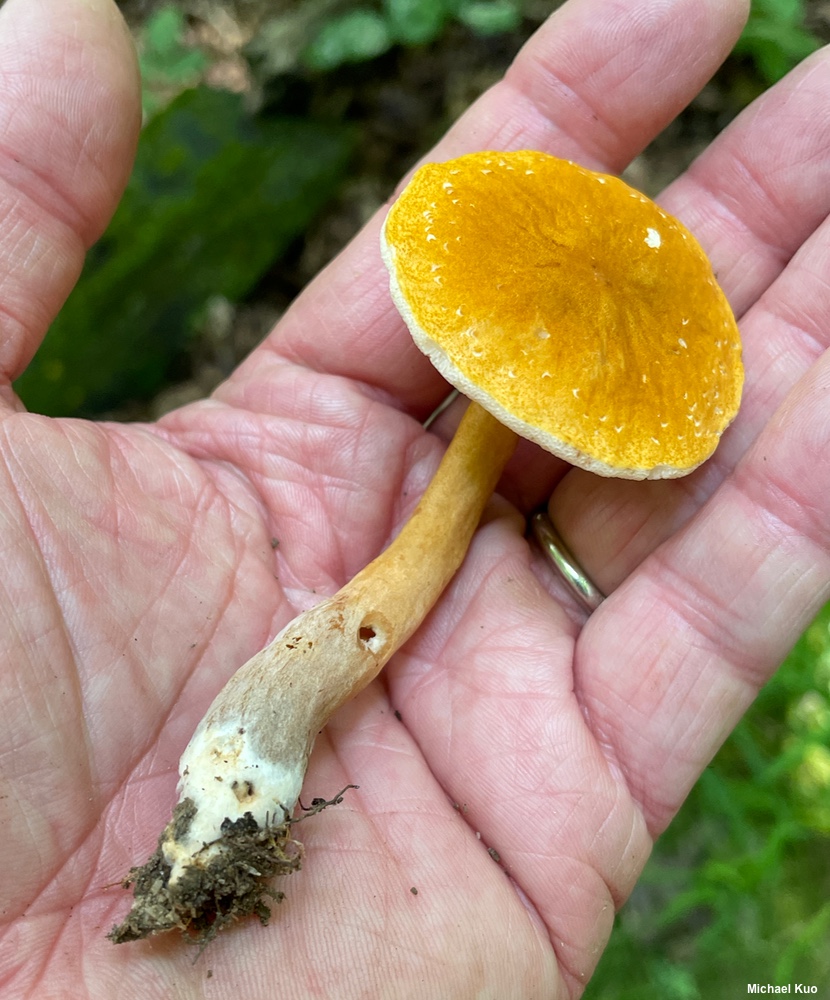
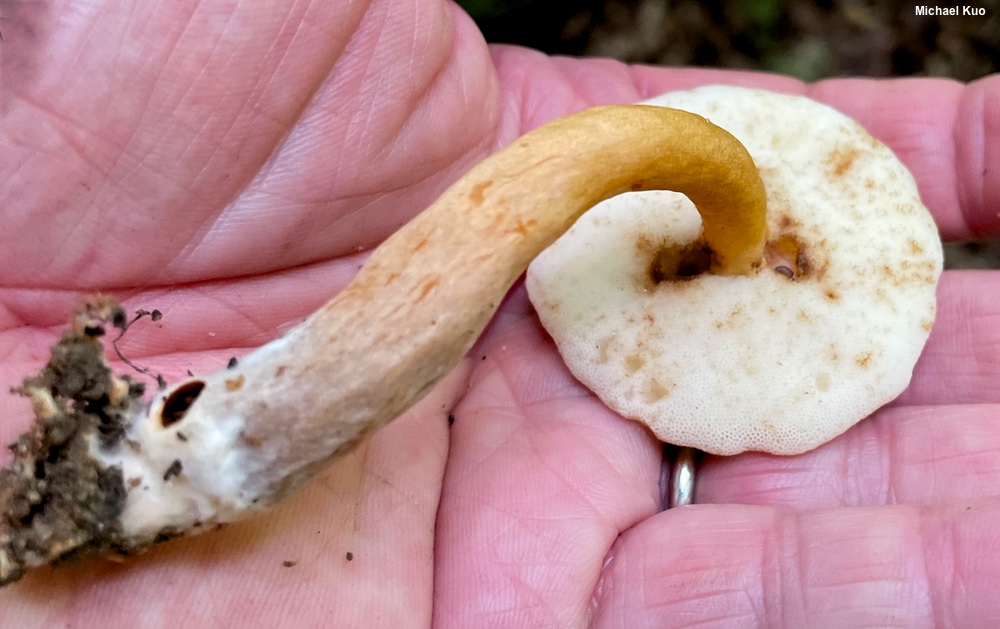
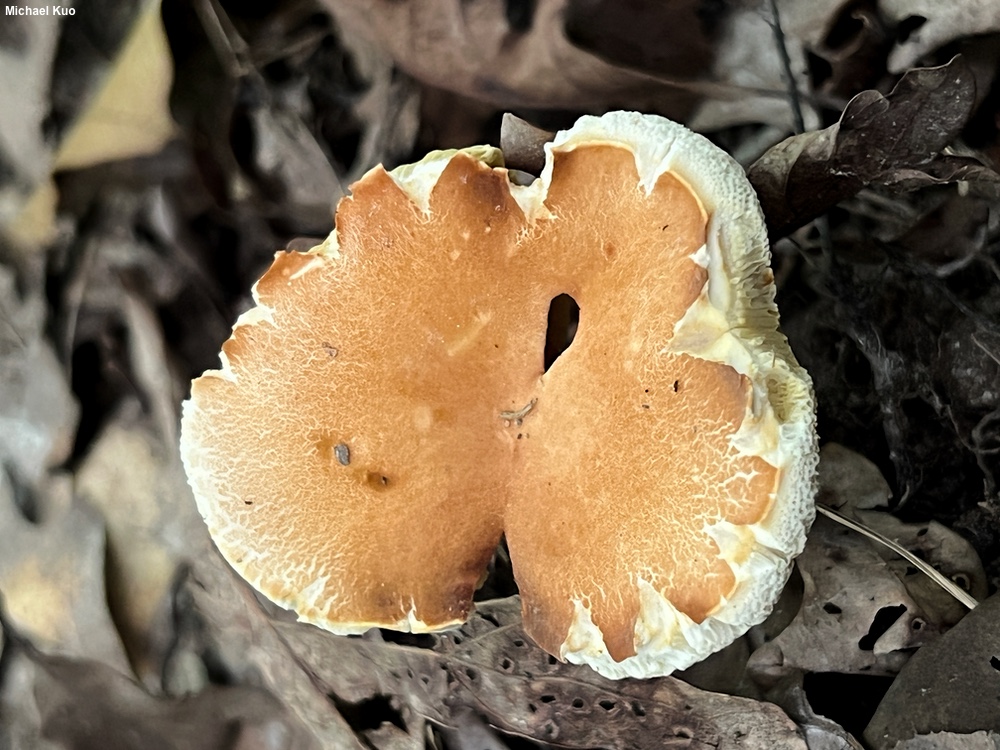
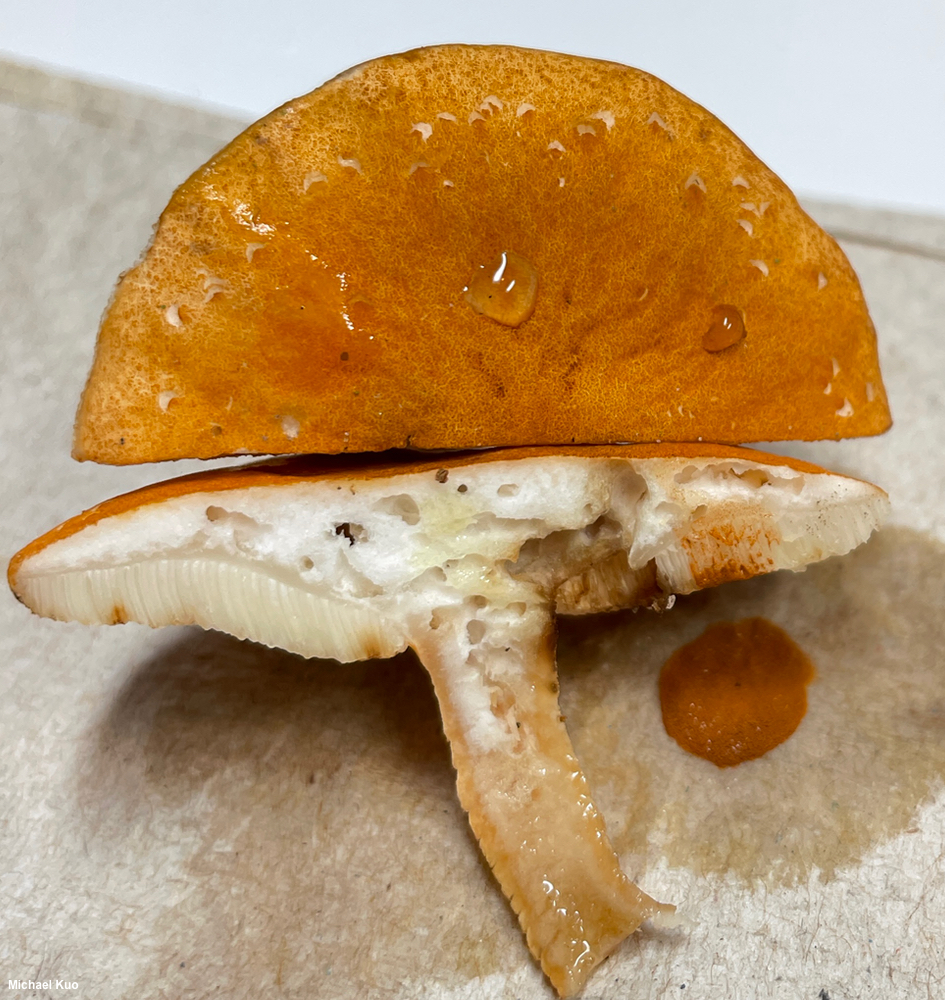
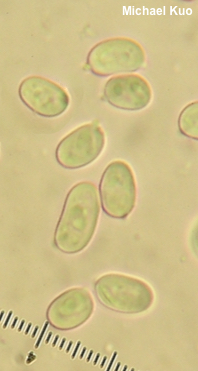
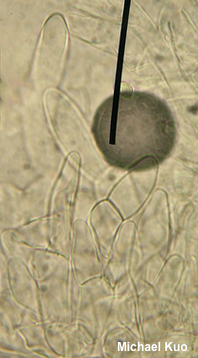
[ Basidiomycota > Boletales > Gyroporaceae > Gyroporus . . . ] Gyroporus smithii by Michael Kuo, 14 June 2026 The collections illustrated and described here might match Gyroporus smithii, which is supposed to be orange and distributed between the Great Plains and the Appalachian Mountains (Davoodian et al. 2020), since they are from Illinois and Indiana and are brownish orange to orangish brown in color. Like other members of the genus Gyroporus, they are boletes that feature yellow spore prints and brittle, hollowing stems. The problem is, Gyroporus smithii, if it is even phylogenetically distinct enough to warrant separation from Gyroporus castaneus (it isn't, in my humble opinion), is only dubiously separated on the basis of its colors and distribution; see the discussion on the page for Gyroporus. Thanks to Michelle Lierl for documenting, collecting, and preserving Gyroporus smithii for study; her collection is deposited in The Herbarium of Michael Kuo. Description: Ecology: Mycorrhizal with oaks and possibly with other hardwoods, growing alone, scattered, or gregariously on the ground, especially in disturbed-ground locations like path sides, embankments, and so on; summer and fall; originally described from Florida (Davoodian 2020), with paratype collections from Florida and Michigan; fairly widely distributed east of the Rocky Mountains below the Great Lakes, and west and south of the Appalachian Mountains. The illustrated and described collections are from Illinois and Indiana. Cap: 1.5–5 cm; convex, becoming broadly convex or nearly flat in age; dry; bald or, when young, slightly velvety; sometimes becoming somewhat wrinkled; usually becoming finely cracked with age; brownish orange; the margin often splitting in places with maturity. Pore Surface: Creamy at first, becoming pale yellow; not bruising, or in age developing orangish to brownish spots; 2–3 angular pores per mm; tubes to 6 mm deep. Stem: 3–10 cm long; 0.5–1 cm thick; more or less equal, or enlarged toward the base; dry; brittle; hollowing; colored like the cap; not bruising; not reticulate; basal mycelium whitish to pastel brownish orange. Flesh: White; not staining on exposure. Odor and Taste: Not distinctive. Chemical Reactions: Ammonia negative to yellowish on cap and flesh. KOH negative to yellowish on cap and flesh. Iron salts negative to grayish brown on cap; negative on flesh. Spore Print:Pale yellow. Microscopic Features: Spores 6–12 x 3.5–6.5 µm; ellipsoid; smooth; hyaline to yellowish in KOH. Basidia 25–32 x 6–12 µm; clavate; 4-sterigmate. Hymenial cystidia scattered and inconspicuous; to 32 x 8 µm; narrowly lageniform; smooth; thin-walled; hyaline in KOH. Pileipellis a trichoderm; elements 5–18 µm wide, smooth, septate, hyaline to dull golden or brownish in KOH; terminal cells cylindric with rounded or, occasionally, narrowed apices—or sometimes narrowly lageniform; subterminal cells not swollen. REFERENCES: N. Davoodian, 2020. (Davoodian et al., 2018; Davoodian et al., 2020. Based on descriptions and photos, the following North American treatments of G. castaneus probably represent G. smithii, at least in part: Singer, 1945; Smith & Thiers, 1971; Smith, Smith & Weber, 1981; Weber & Smith, 1985 (?); Phillips, 1991/2005; Lincoff, 1992; Both, 1993; Bessette, Roody & Bessette, 2006; Kuo, 2007; Binion et al., 2009; Kuo & Methven, 2014; Elliott & Stephenson, 2018; Sturgeon, 2018; McKnight et al., 2021.) Herb. Kuo 07010703, 07250902, 07051402, 07242201, 07282201, 07012501. This website contains no information about the edibility or toxicity of mushrooms. |
© MushroomExpert.Com |
|
Cite this page as: Kuo, M. (2026, June). Gyroporus smithii. Retrieved from the MushroomExpert.Com Web site: http://www.mushroomexpert.com/gyroporus_smithii.html |