| Major Groups > Gilled Mushrooms > Dark-Spored > Wood-Rotting LBMs / Pholiota > Flammulaster erinaceellus |

|
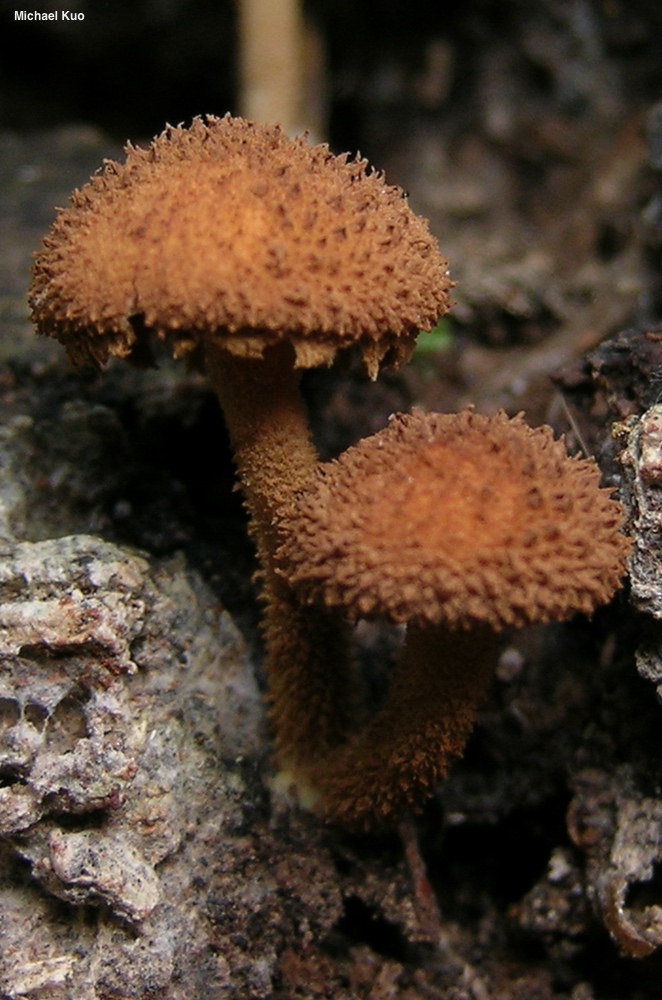
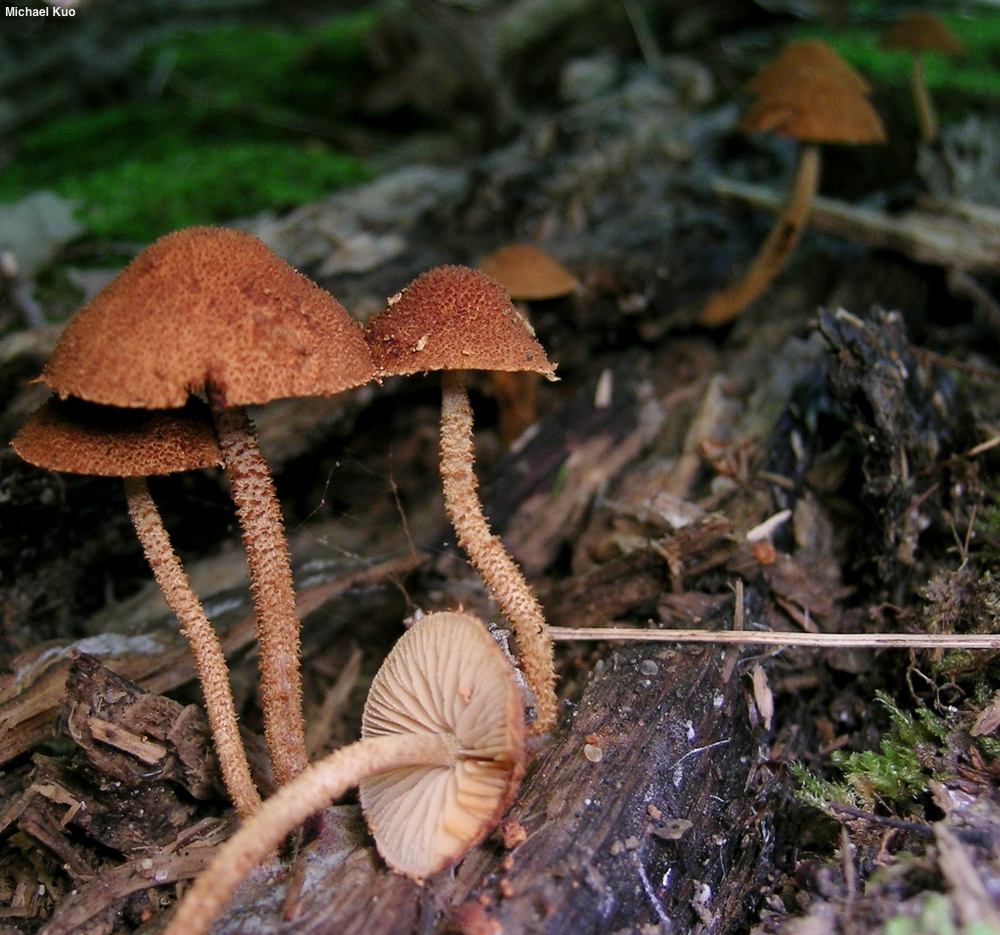
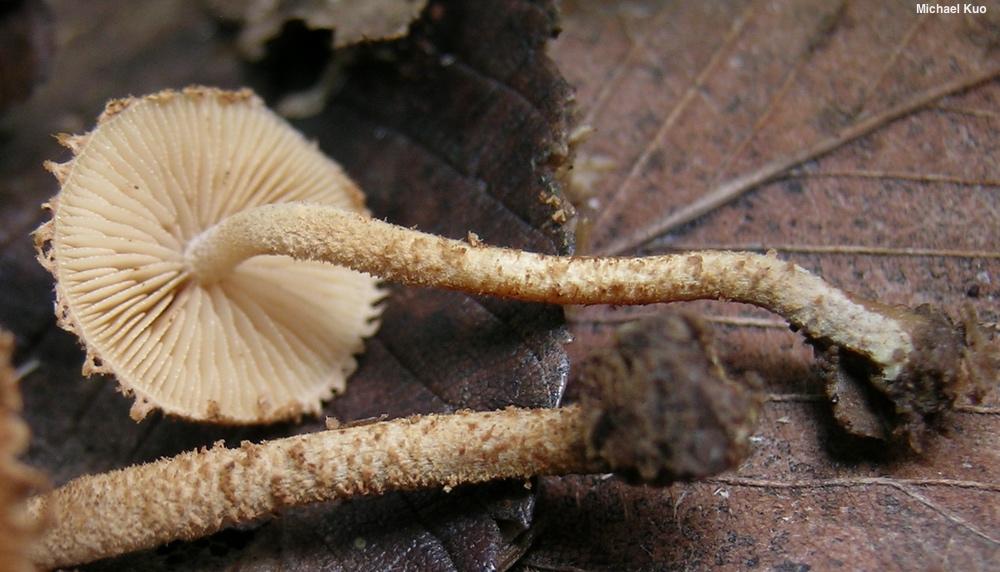
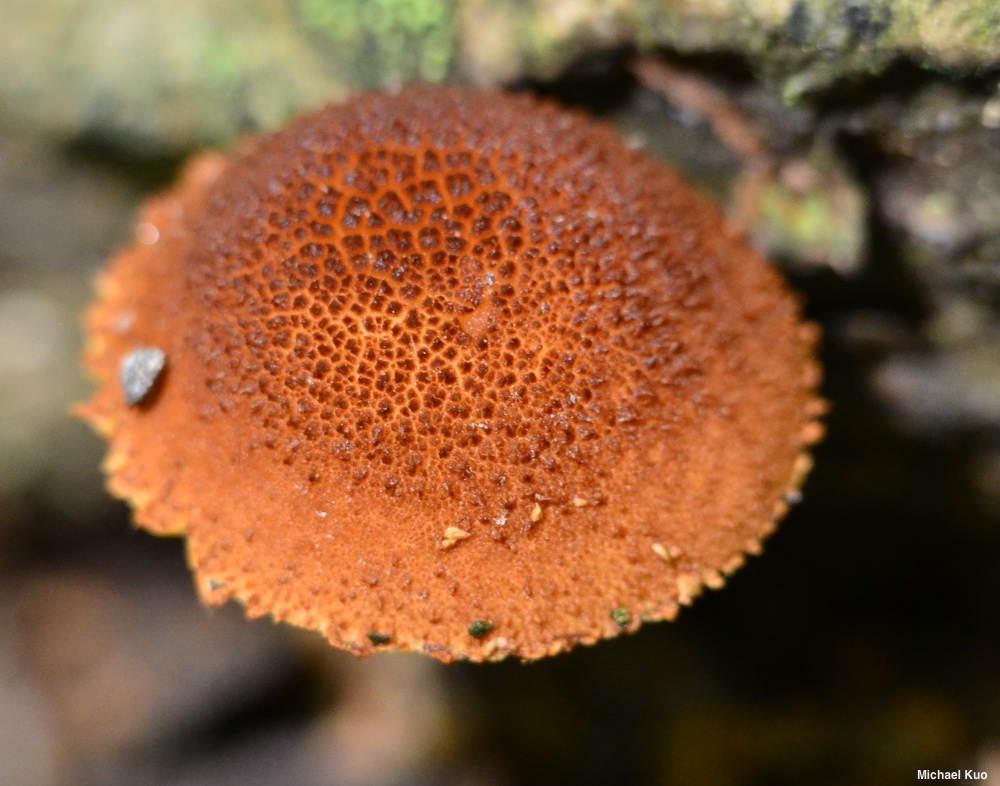
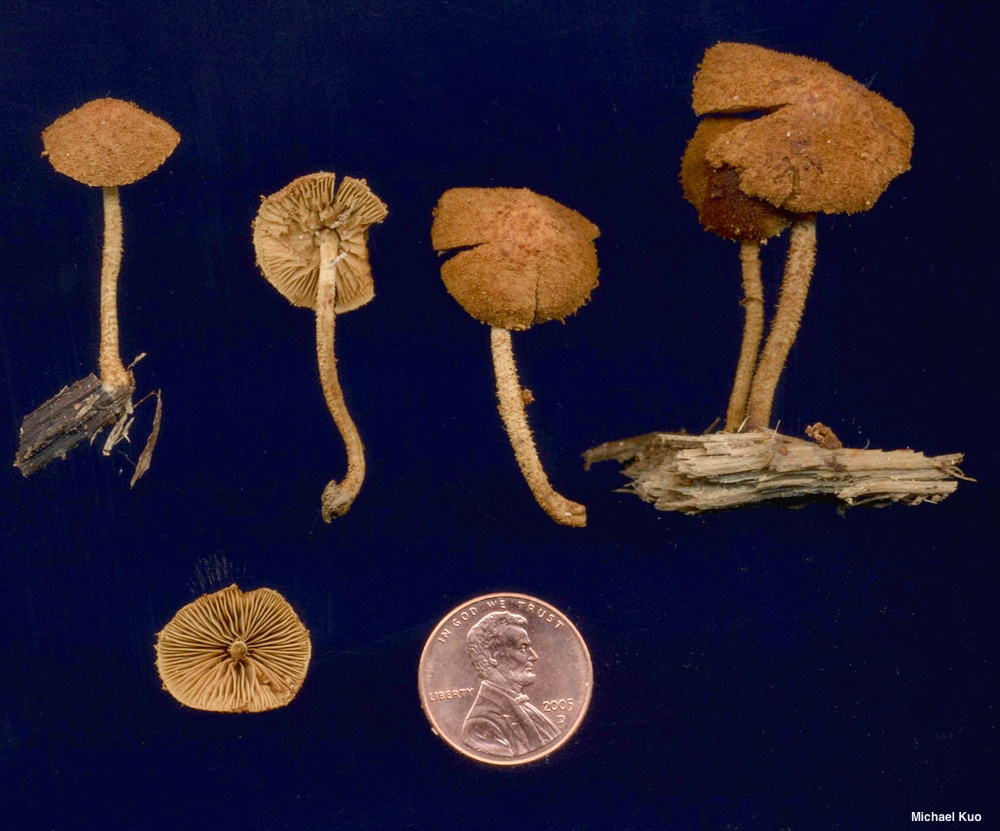
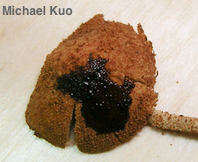
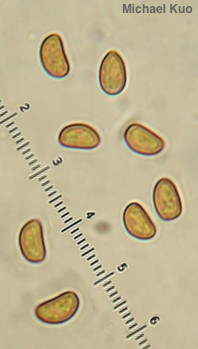
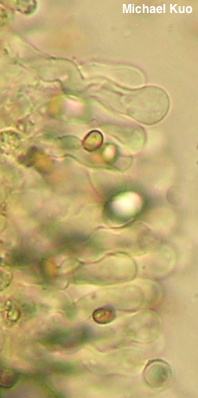
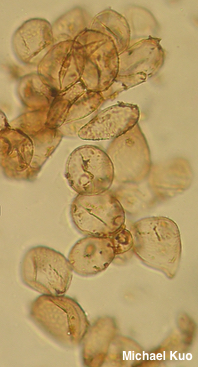
[ Basidiomycota > Agaricales > Tubariaceae > Flammulaster . . . ] Flammulaster erinaceellus by Michael Kuo, 28 January, 2026 Flammulaster? I barely even know her! Flammulaster erinaceellus is a Midwestern and and eastern North American LBM ("little brown mushroom") found on the well-decayed deadwood of hardwoods (usually there is no bark left on the log). It features a finely scaly cap that turns red, then quickly black with the application of KOH, along with gills that are attached to the stem and are pale when young but become brown with maturity. The spore print is brown. Microscopic features include smooth, ellipsoid spores, capitate cheilocystidia, and a pileipellis with cystoderma-like chains of inflated cells. Compare Flammulaster erinaceellus with Flammulaster carpophiluss, which is a little smaller, paler, and grows on leaf litter. Also compare with Pluteus granularis (larger, with a brownish pink spore print and gills that are free from the stem) and Cystoderma granulosum (larger, growing on the ground, spore print white). Flammulaster erinaceella is an alternate spelling. Phaeomarasmius erinaceellus is a synonym. The mushroom appearing in some European literature as Flammulaster erinaceella is actually Flammulaster muricatus (Vellinga 1986). Description: Ecology: Saprobic; growing alone, gregariously, or in small, loose clusters on the well-decayed, decorticated deadwood of hardwoods; causing a white rot; spring through fall; originally described from New York (Peck 1878); probably widely distributed east of the Great Plains. The illustrated and described collections are from Illinois, Indiana, Michigan, and Missouri. Cap: 1–4 cm; convex becoming planoconvex or nearly flat; dry; densely covered with granular to fibrillose scales that often become powdery; dark brown to golden brown or tawny brown; the margin sometimes hung with remnants of the partial veil. Gills: Broadly or narrowly attached to the stem; close; short-gills frequent; whitish to pale yellow at first, becoming brownish to brown. Stem: 25–40 mm long; 2–6 mm mm thick; equal; smooth and whitish to brownish at the apex, but elsewhere covered with granular scales and fibrils like the cap, but often less densely, revealing the paler color of the stem surface underneath; sometimes merely fibrillose; basal mycelium white. Flesh: Yellowish to brownish; unchanging when sliced. Odor: Not distinctive, or slightly radishlike. Chemical Reactions: KOH red, then quickly black on cap surface. Spore Print: Yellowish brown. Microscopic Features: Spores 6–10 x 3–5 µm; ellipsoid; without a pore; smooth; yellowish to orangish brown in KOH; inamyloid. Basidia 20–25 x 6–8 µm; clavate; 4-sterigmate. Cheilocystidia 30–50 x 8–12.5 µm; cylindric, with clavate to subcapitate or capitate apices; smooth; thin-walled; hyaline to brown in KOH. Pleurocystidia not found. Pileipellis composed of chained subglobose to globose, napiform, or ovoid elements 25–50 µm wide, slightly encrusted, reddish brown in KOH. Clamp connections present. REFERENCES: (C. H. Peck, 1878) R. Watling, 1967. (Kauffman, 1918; Murrill, 1924; Overholts, 1927; Smith & Hesler, 1968; Smith, Smith & Weber, 1979; Vellinga, 1986; Lincoff, 1992; Roody, 2003; Kuo & Methven, 2014; Baroni, 2017; Woehrel & Light, 2017.) Herb. Kuo 05300409, 09240505, 09160601, 09120801, 08080902, 05121202. This site contains no information about the edibility or toxicity of mushrooms. |
© MushroomExpert.Com |
|
Cite this page as: Kuo, M. (2026, January). Flammulaster erinaceellus. Retrieved from the MushroomExpert.Com Web site: http://www.mushroomexpert.com/flammulaster_erinaceellus.html |