EUMYCETOZOANS
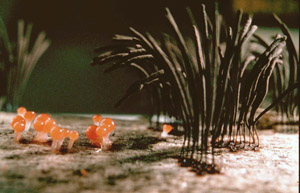 The eumycetozoans (or slime molds) are a monophyletic group of microscopic organisms characterized by an amoeba-like trophic stage and aerial spore-bearing reproductive structures. Eumycetozoans are widespread and often common to even abundant in nature, where they are major predators of other microorganisms (bacteria, yeasts, cyanobacteria and green algae). This would suggest some degree of ecological significance. However, because of their cryptic life cycle and the fact that the number of specialists studying them is relatively small, eumycetozoans are among the most understudied groups of terrestrial organisms. The project, currently being carried out at the University of Arkansas and funded by two major grants from the National Science Foundation (NSF), seeks to expand, standardize, systematize and (ultimately) summarize the body of information available on the taxonomy, ecology and biogeographical distribution of all three groups of eumycetozoans (myxomycetes, dictyostelids and protostelids)
Home, About the Project, Contact Information, Searchable Database, Educational Materials, Expeditions and Events