| Major Groups > Gilled Mushrooms > Dark-Spored > Chroogomphus > Chroogomphus ochraceus |

|
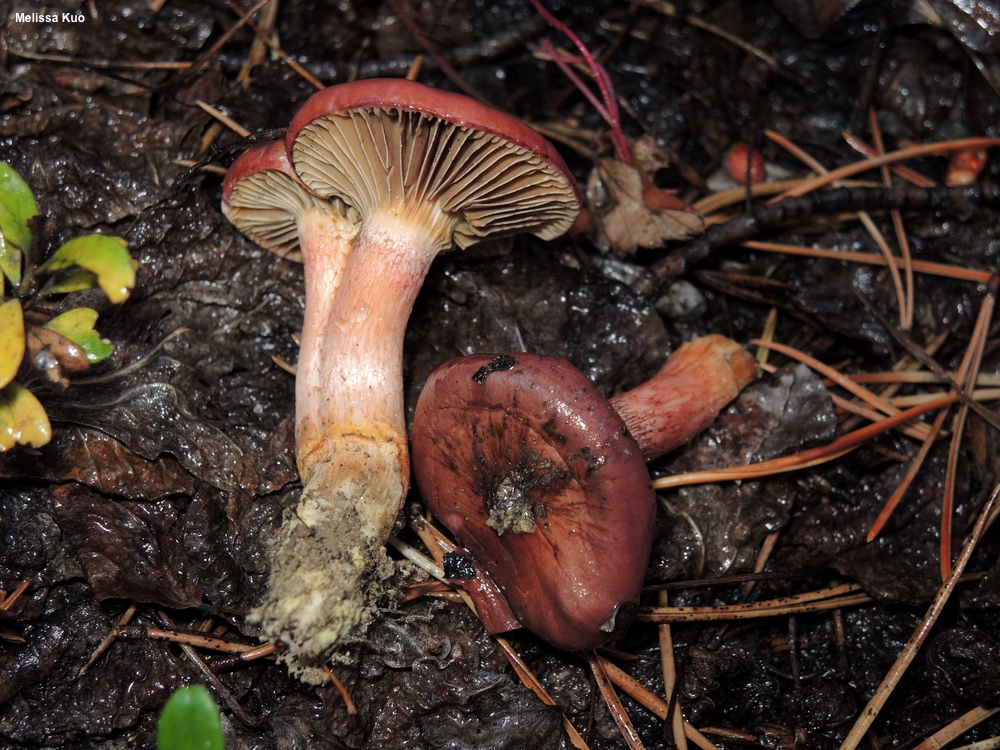
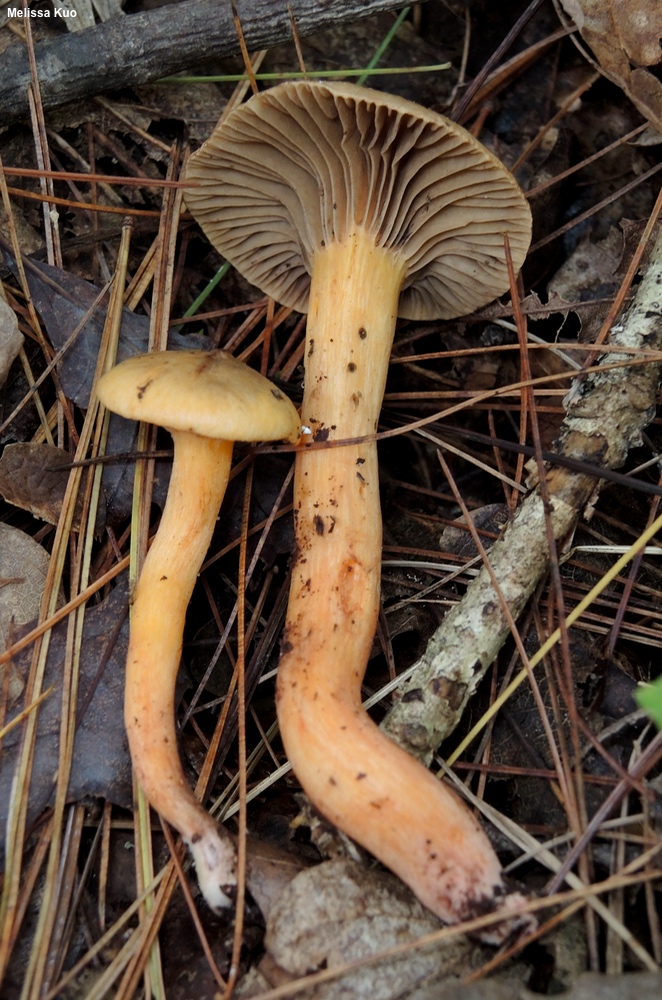
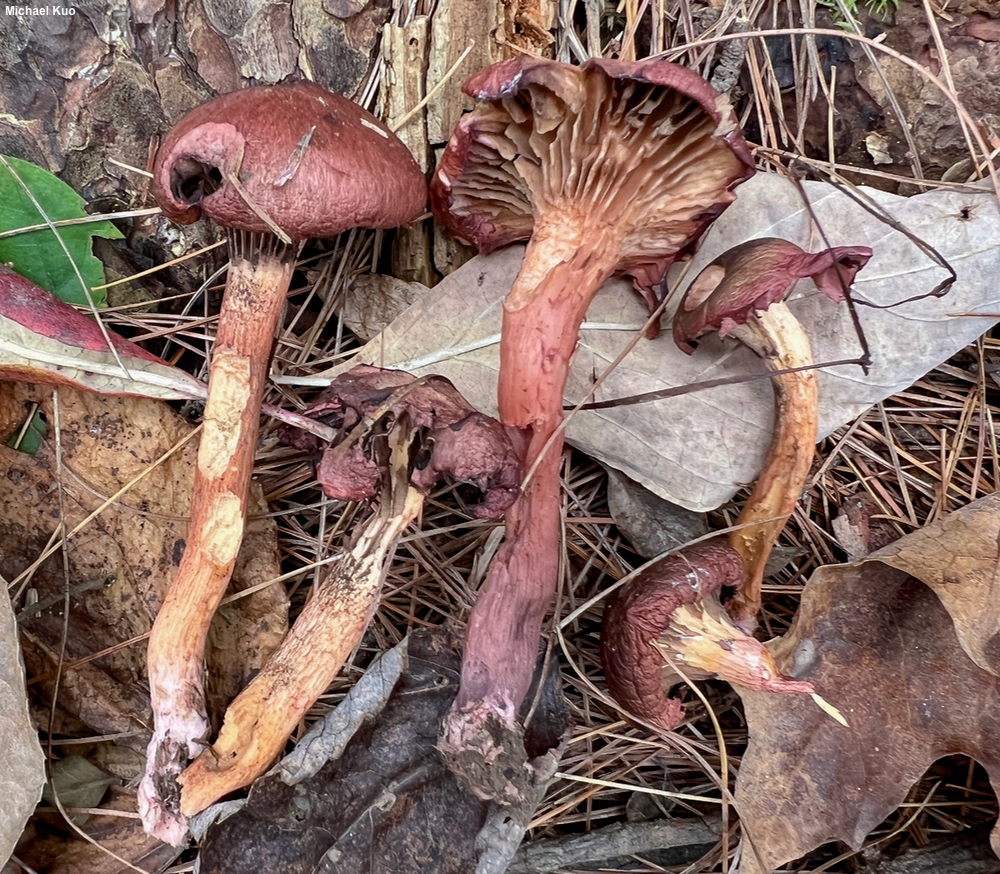
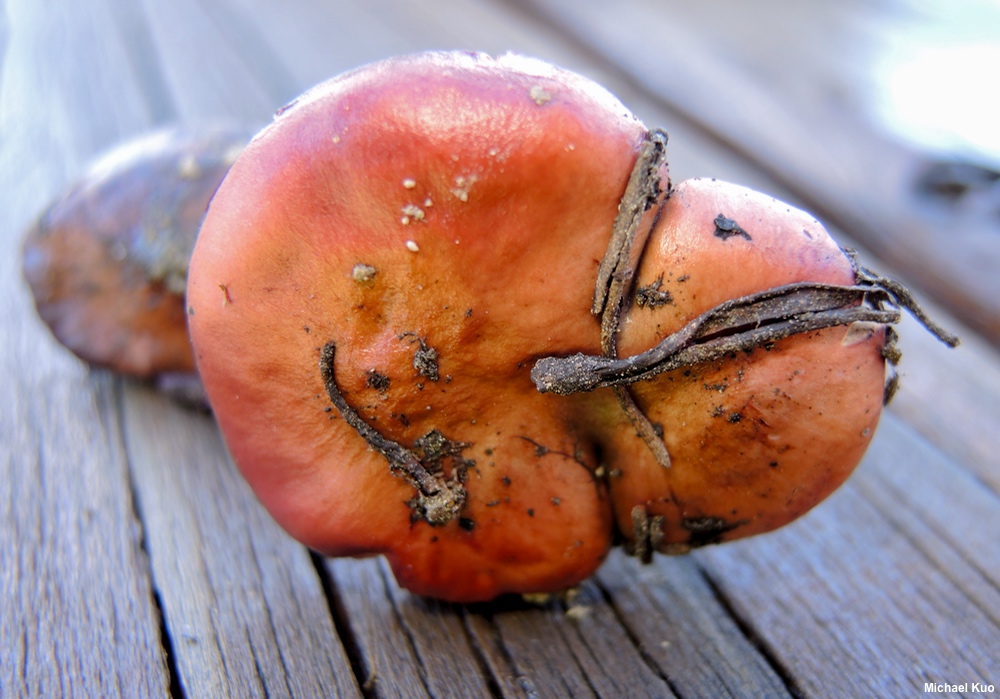
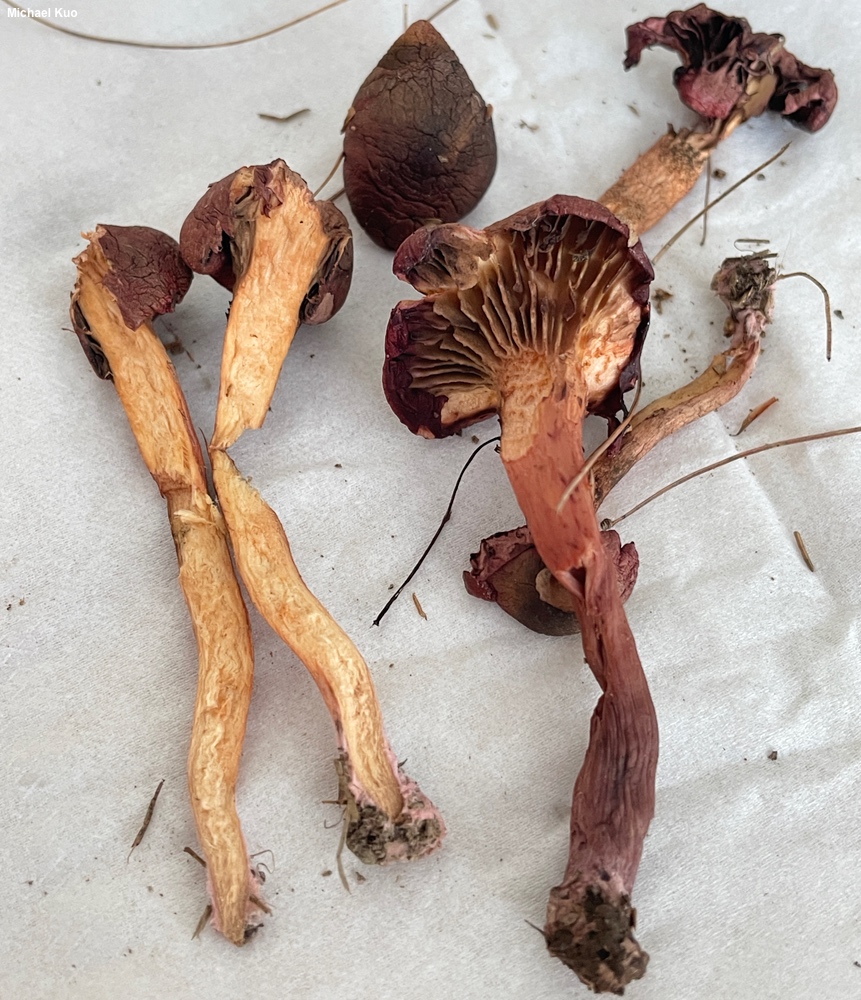
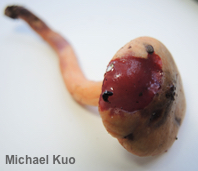
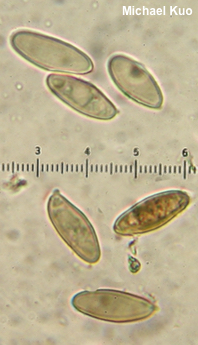
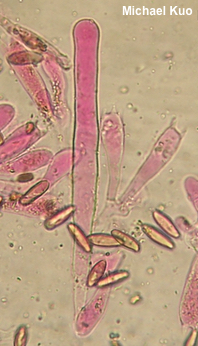
[ Basidiomycota > Boletales > Gomphidiaceae > Chroogomphus . . . ] Chroogomphus ochraceus by Michael Kuo, 8 November 2026 Chroogomphus ochraceus is a highly variable species found in conifer forests across North America, with a cap that is sometimes yellow or yellowish throughout development, but can also be orange, brown, olive, gray, purple, red, or anything in between. The most stable features are the fact that the cap is sticky when fresh, and the thin-walled cystidia. Species in the Chroogomphus vinicolor group can appear similar, but feature thick-walled cystidia. Several versions of Chroogomphus ochraceus have been designated over the years, including Chroogomphus ochraceus ochraceus, found with Suillus americanus under white pines (eastern and western), and Chroogomphus ochraceus superiorensis, found under red pine. Chroogomphus ochraceus was treated as "Chroogomphus rutilus" by many North American authors prior to O. K. Miller, Jr.'s 2003 publication designating rutilus as a strictly European species. Description: Ecology: Apparently parasitic on species of Suillus, which are mycorrhizal with conifers (mostly pines); growing alone, scattered, or gregariously; fall, or over winter in warm climates; originally described from Oregon (Kaufman 1925); widely distributed in North America. The illustrated and described collections are from Colorado, Kentucky, Michigan, and Ohio. Cap: 2–7 cm wide; convex, occasionally with a central point; bald; sticky to slimy when fresh and young, but often dry and shiny or silky when collected; color ranging from yellowish to orangish, brownish, reddish, purplish red, or reddish brown—usually darker with maturity. Gills: Running down the stem; distant or nearly so; short gills occasional; pale yellowish at first, becoming grayish cinnamon and finally blackish as the spores mature. Stem: 4–8 cm long; 0.5–1 cm wide; tapering to base; bald or a little fibrillose; yellowish to pale orangish or reddish; sometimes with a wispy ring zone from the collapsed partial veil; basal mycelium white to pink or purplish. Flesh: Whitish to pale orange in cap; yellow to pink or pale orange in the stem. Odor and Taste: Not distinctive. Chemical Reactions: KOH negative to purple on cap surface; pink to purple on flesh. Spore Print: Dark gray to black. Microscopic Features: Spores 14–24 x 5–7 µm; subfusiform; smooth; hyaline to brownish in KOH. Basidia 35–42 x 7–10 µm; subclavate; 4-sterigmate. Hymenial cystidia 70–125 x 11–20 µm; subcylindric to subutriform, often with a slightly swollen apex; smooth or encrusted; walls up to about 1.0 µm thick; hyaline to brown in KOH. Pileipellis an ixotrichoderm of elements 2–7 µm wide, smooth, hyaline to dirty yellowish in KOH. REFERENCES: (C. H. Kauffman, 1925) O. K. Miller Jr., 1964. (Kauffman, 1925; Singer, 1949; Miller, 1964; Thiers, 1985; Miller & Aime, 2001; Miller, 2003; Miller & Miller, 2006; Li et al., 2009; Kuo & Methven, 2014; Desjardin, Wood & Stevens, 2015; Martín et al., 2016; Siegel & Schwarz, 2016; Scambler et al., 2018; McKnight et al., 2021; Ayala-Vásquez et al., 2026.) Herb. Kuo 09120510, 09020603, 08121502, 10041501, 11152502. This site contains no information about the edibility or toxicity of mushrooms. |
© MushroomExpert.Com |
|
Cite this page as: Kuo, M. (2026, November). Chroogomphus ochraceus. Retrieved from the MushroomExpert.Com Web site: http://www.mushroomexpert.com/chroogomphus_ochraceus.html |