| Major Groups > Gilled Mushrooms > Pink-Spored > Pluteus > Pluteus longistriatus |

|
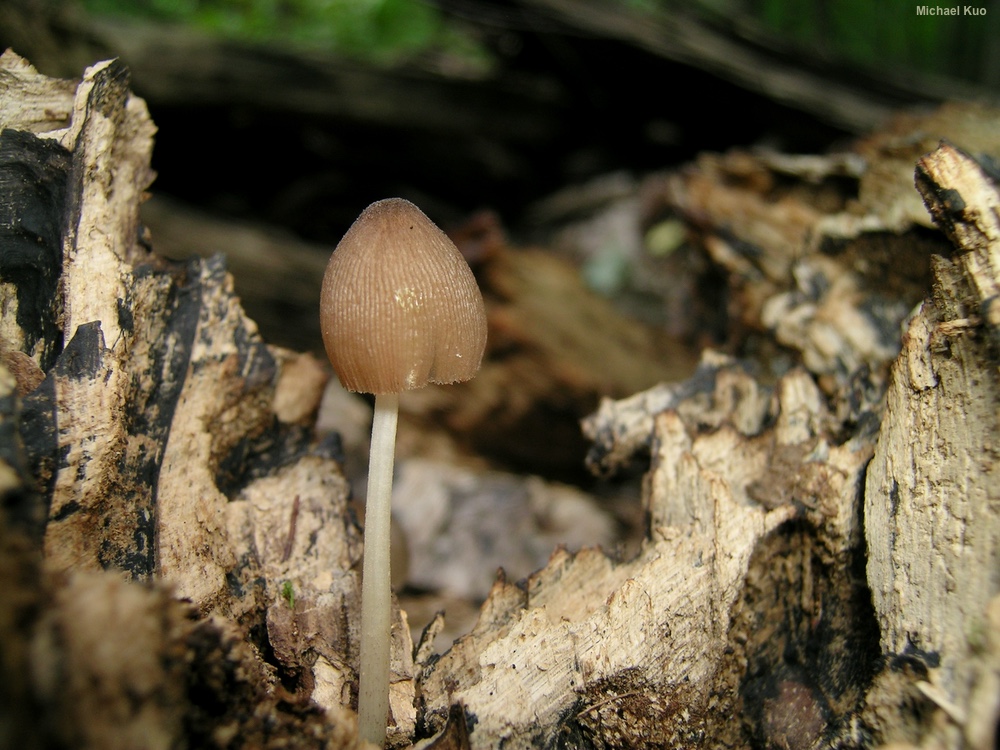
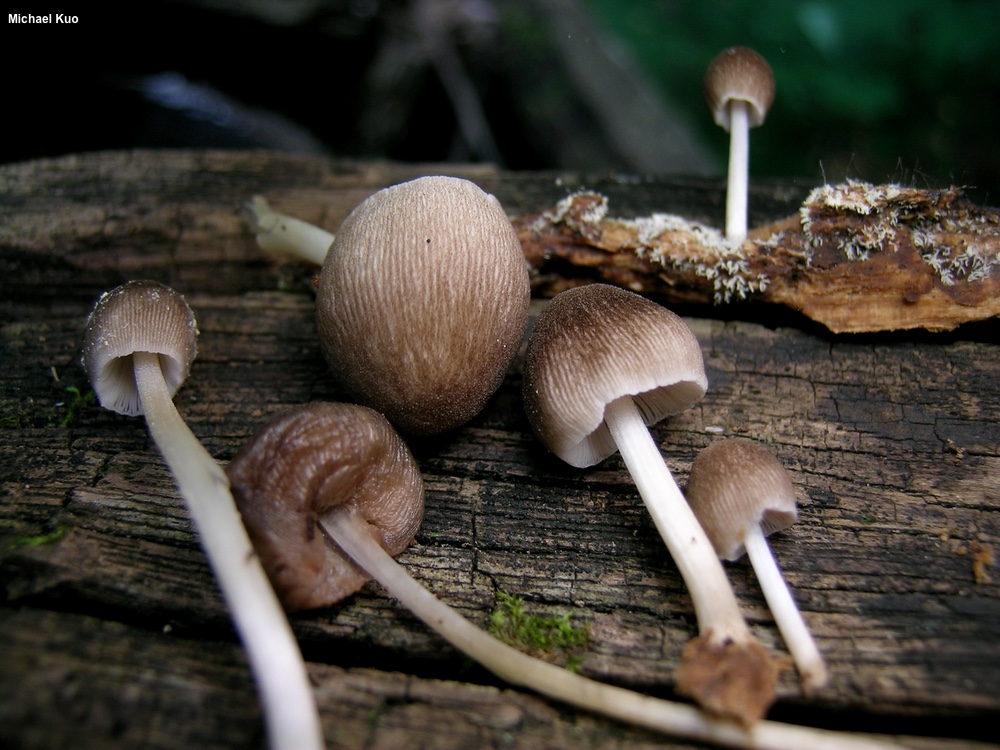
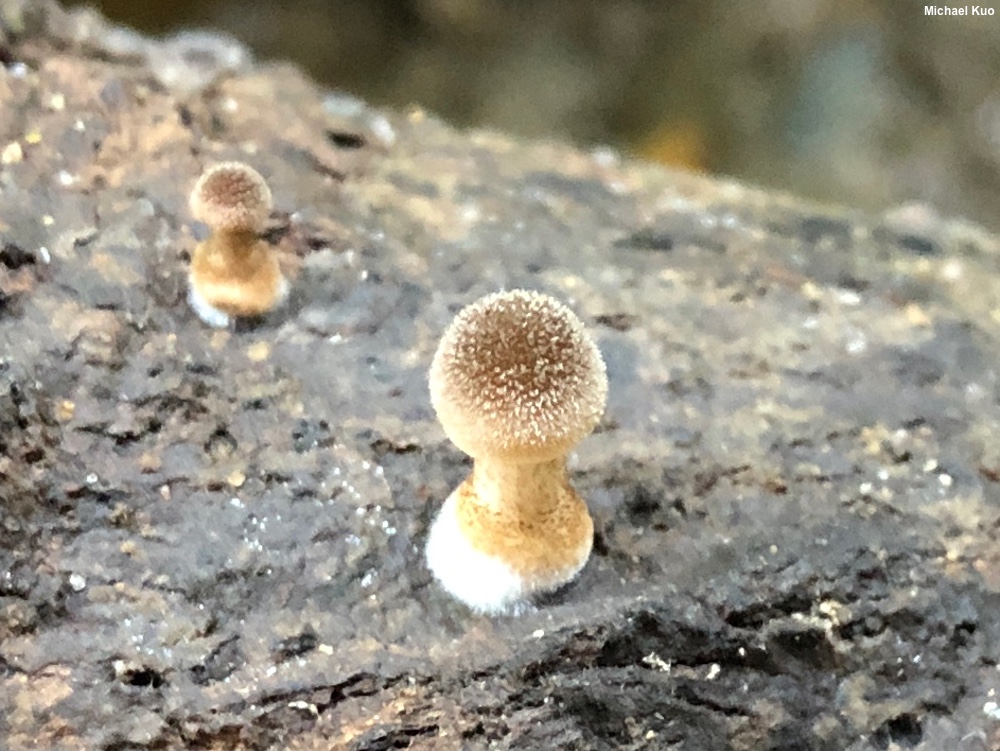
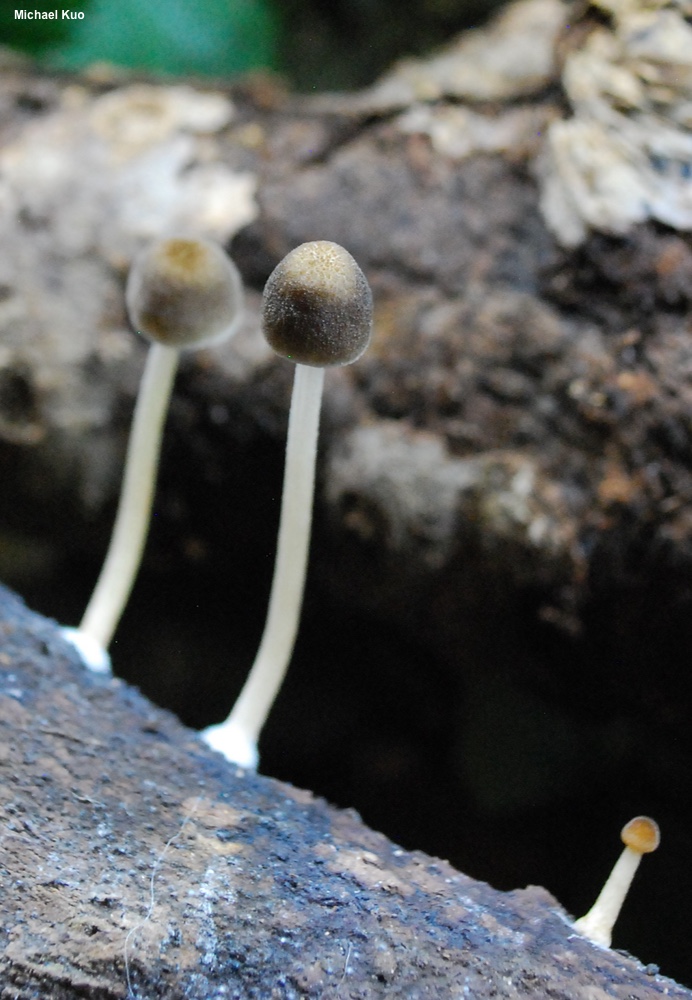
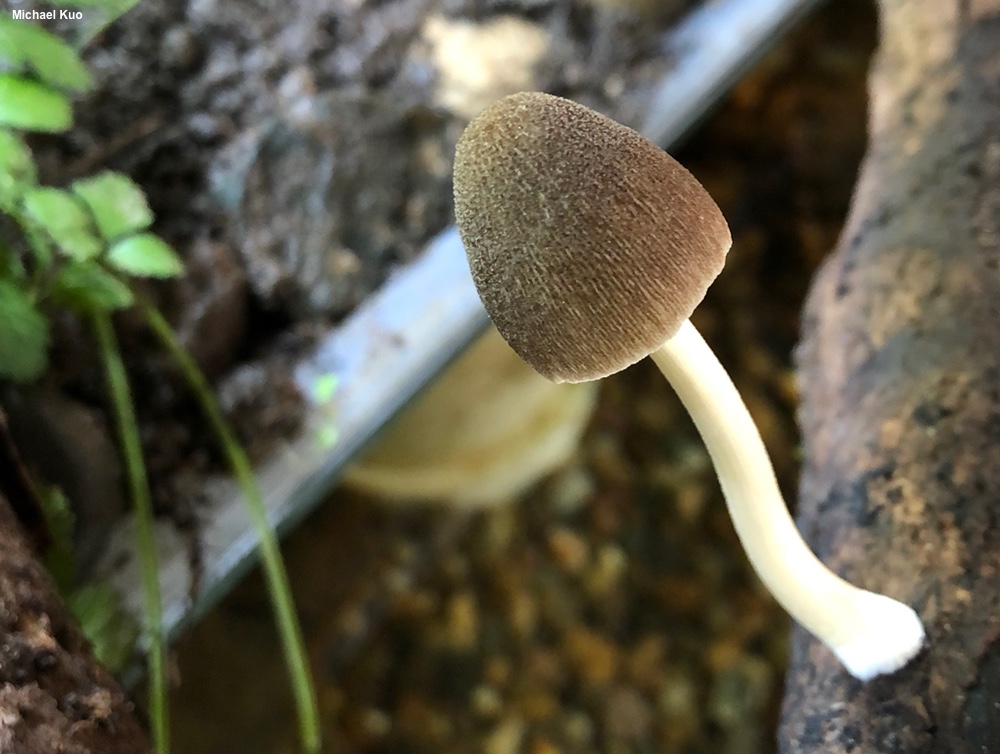
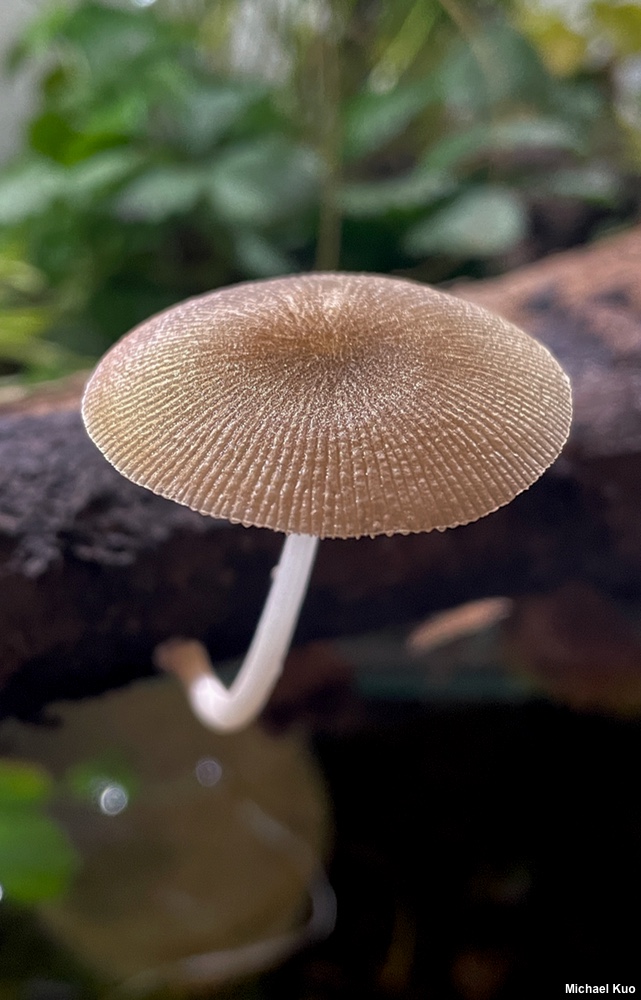
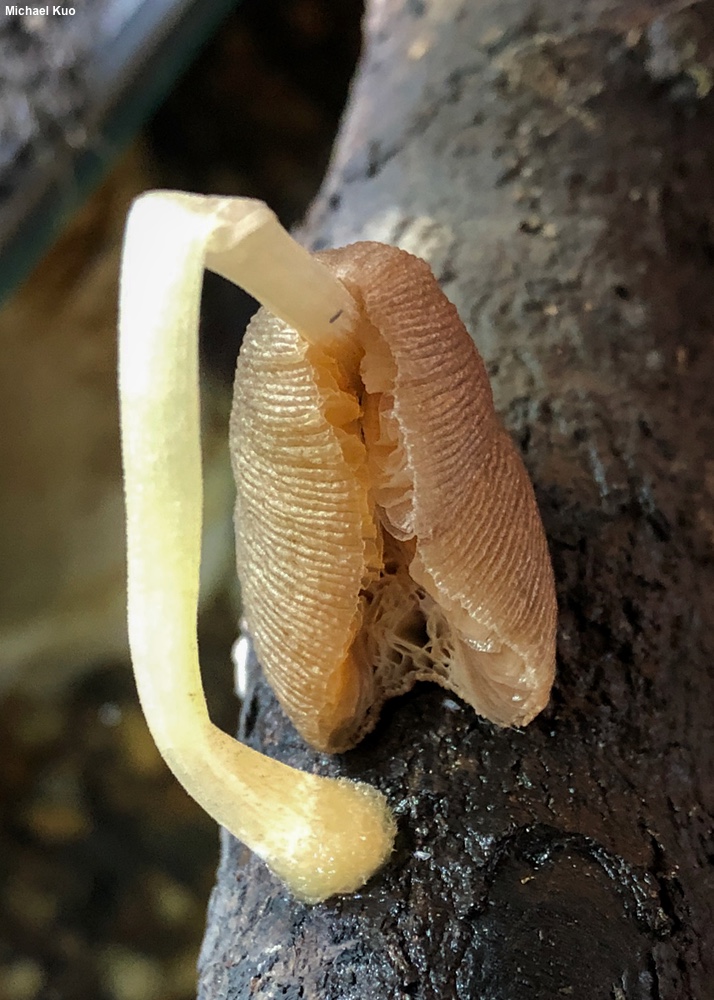
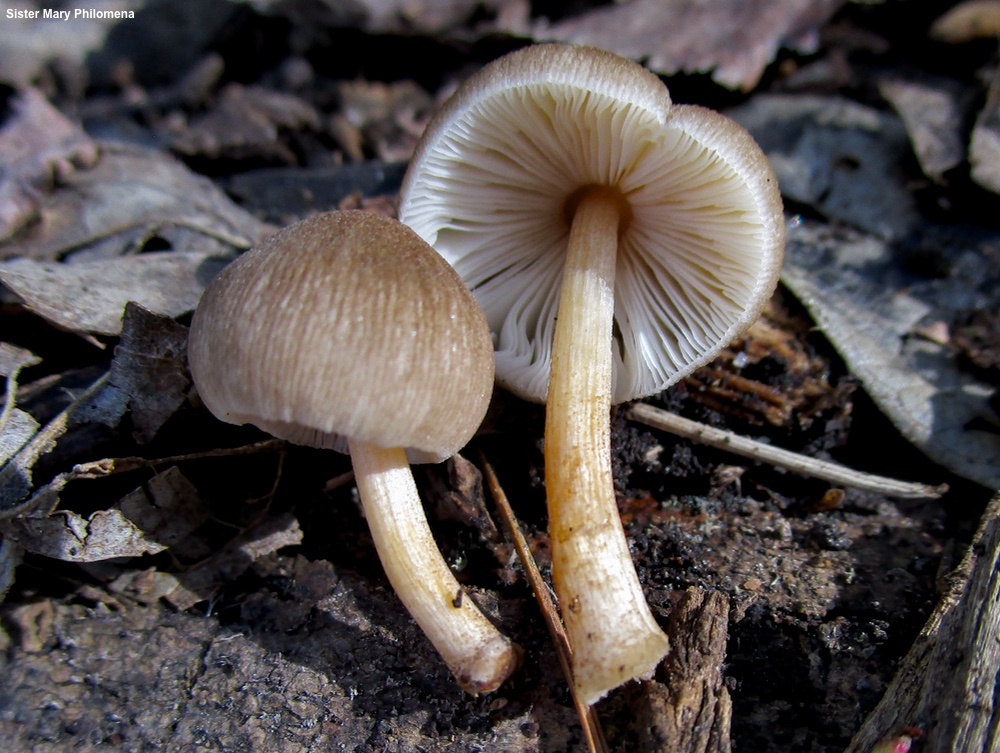
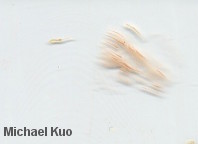
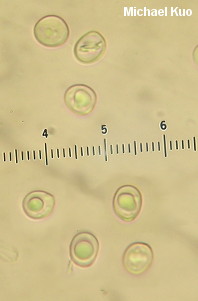
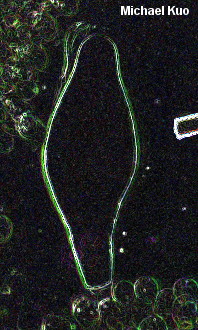
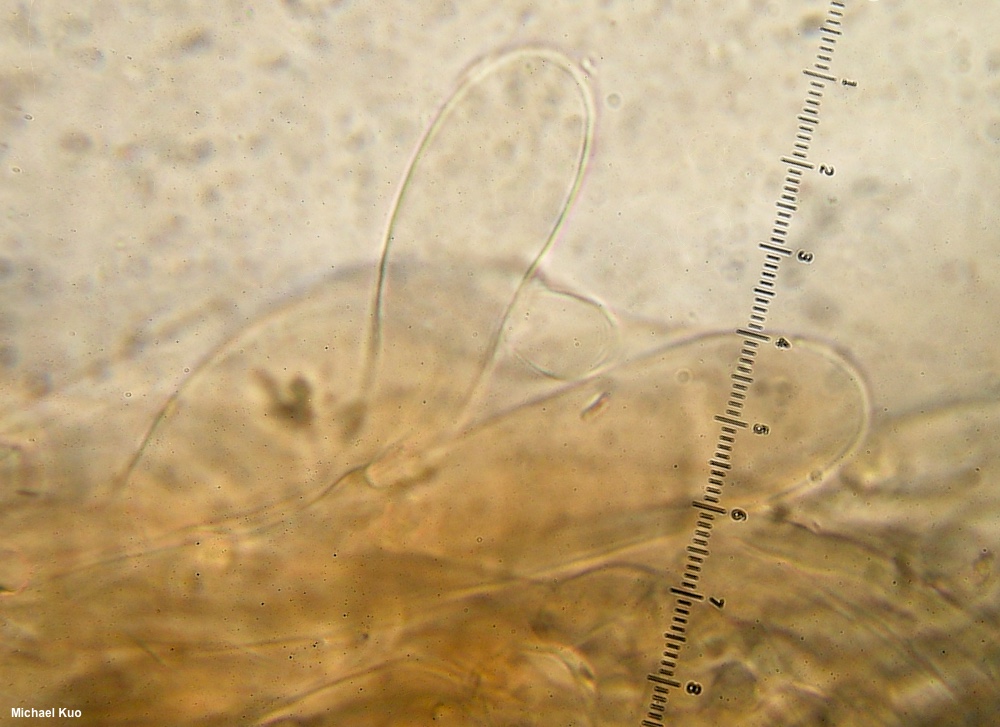
[ Basidiomycota > Agaricales > Pluteaceae > Pluteus . . . ] Pluteus longistriatus by Michael Kuo, 19 June 2026 This little grayish brown Pluteus is recognized by the long striations that extend from the cap margin nearly to the center of the cap, revealing whitish flesh in the cracks. Like other species of Pluteus it has a pink spore print, gills that are free from the stem, and it grows on wood. It is a fragile mushroom and, in hot, humid weather, its gills sometimes begin to deteriorate and dissolve—and this can happen before the gills turn pink from maturation of the spores, leading to potential identification confusion. Under the microscope Pluteus longistriatus features thin-walled cystidia, nearly round spores, and a distinctive pileipellis that features a layer of inflated elements arising from a cutis. Many of the specimens illustrated to the right appeared one spring on small hardwood logs we had placed in our vivarium the previous year for toads to climb on. We were fortunate to be able to document the development of the Pluteus longistriatus fruiting bodies from button stage to past maturity. Thanks to Sister Mary Philomena, O. P., for documenting, collecting, and preserving Pluteus longistriatus for study; her collection is deposited in The Herbarium of Michael Kuo. Description: Ecology: Saprobic on decaying hardwood logs and debris; growing alone or gregariously; summer and fall; originally described "in one of the streets of Albany" New York (Peck 1878, 1885); in North America widely distributed and common from the Great Plains eastward, and occasionally reported in Mexico (although these reports may represent the macroscopically similar Pluteus multistriatus); documented in Italy and Slovenia (Ferisin & Dovana 2019). The illustrated and described collections are from Illinois, Missouri, and Texas. Cap: 1–5.5 cm; convex or slightly bell-shaped at first, becoming broadly convex or nearly flat; fragile; dry; finely, innately, radially fibrillose; developing cracks and fissures that extend from the margin almost to the center; gray-brown to brownish gray. Gills: Free from the stem; close; short-gills frequent; whitish at first, becoming pinkish; soft and, in hot and humid conditions, often collapsing or dissolving. Stem: 3–5 cm long; 1–2 mm thick; equal; bald or with a few fibrils; whitish. Flesh: Insubstantial; pale. Odor: Not distinctive. Chemical Reactions: KOH on cap surface negative. Spore Print: Brownish pink. Microscopic Features: Spores 5–7 x 4–6 µm; broadly ellipsoid to subglobose; smooth; hyaline in KOH; inamyloid. Basidia 22–25 x 5–6 µm; clavate; 4-sterigmate. Cheilocystidia 25–50 x 10–20 µm; subclavate to clavate, ellipsoid, or widely cylindric; smooth; thin-walled; hyaline in KOH. Pleurocystidia 50–75 x 12–35 µm; widely lageniform, or utriform; smooth; thin-walled; hyaline in KOH. Pileipellis a radial cutis of semigelatinized elements that are brown in KOH, smooth, 5–12.5 µm wide; terminal cells inflated and upright, cylindric to subclavate, clavate, obpyriform, or cystidioid (fusiform), up to 25 µm wide. REFERENCES: (C. H. Peck, 1878) C. H. Peck, 1885. (Kauffman, 1918; Singer, 1956; Smith, Smith & Weber, 1979; Arora, 1986; Lincoff, 1992; Barron, 1999; Roody, 2003; McNeil, 2006; Justo et al., 2011; Kuo & Methven, 2014; Baroni, 2017; Ferisin & Dovana, 2019; McKnight et al., 2021.) Herb. Kuo 09170402, 09190605, 08270901, 03162101, 04162101, 12102201. This site contains no information about the edibility or toxicity of mushrooms. |
© MushroomExpert.Com |
|
Cite this page as: Kuo, M. (2026, June). Pluteus longistriatus. Retrieved from the MushroomExpert.Com Web site: http://www.mushroomexpert.com/pluteus_longistriatus.html |