| Major Groups > Gilled Mushrooms > Dark-Spored > Inocybe > Inocybe communis |

|
[Basidiomycota > Agaricales > Inocybaceae > Inocybe . . . ] Inocybe communis by Michael Kuo, 29 August 2026 Only recently given a name but often collected over the years by Midwestern and eastern North American collectors, Inocybe communis can be identified with a combination of features:
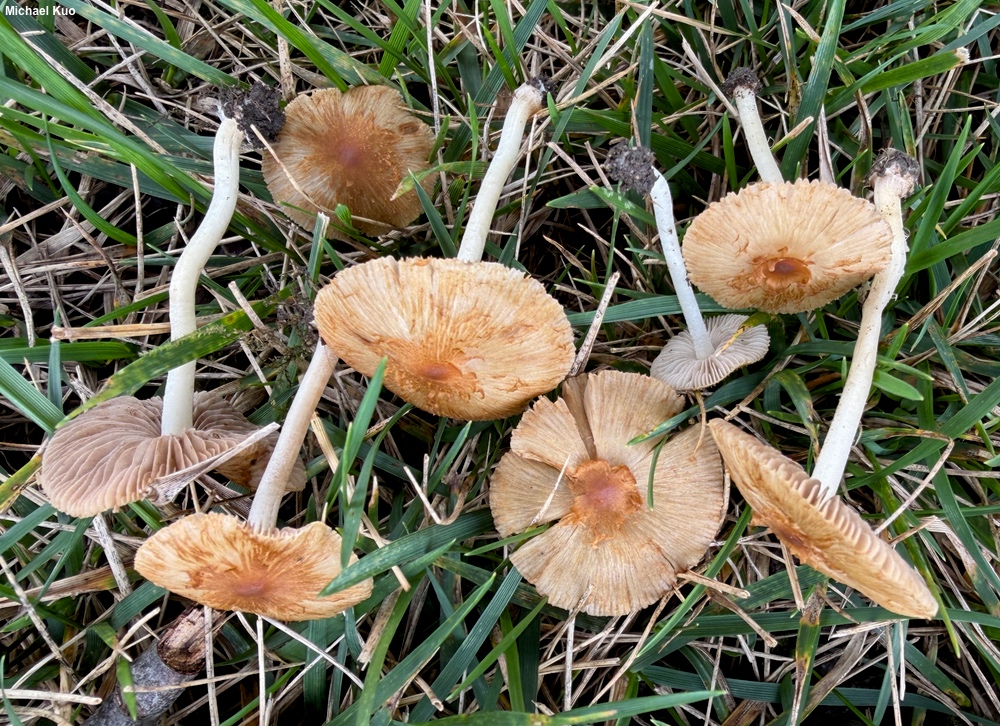
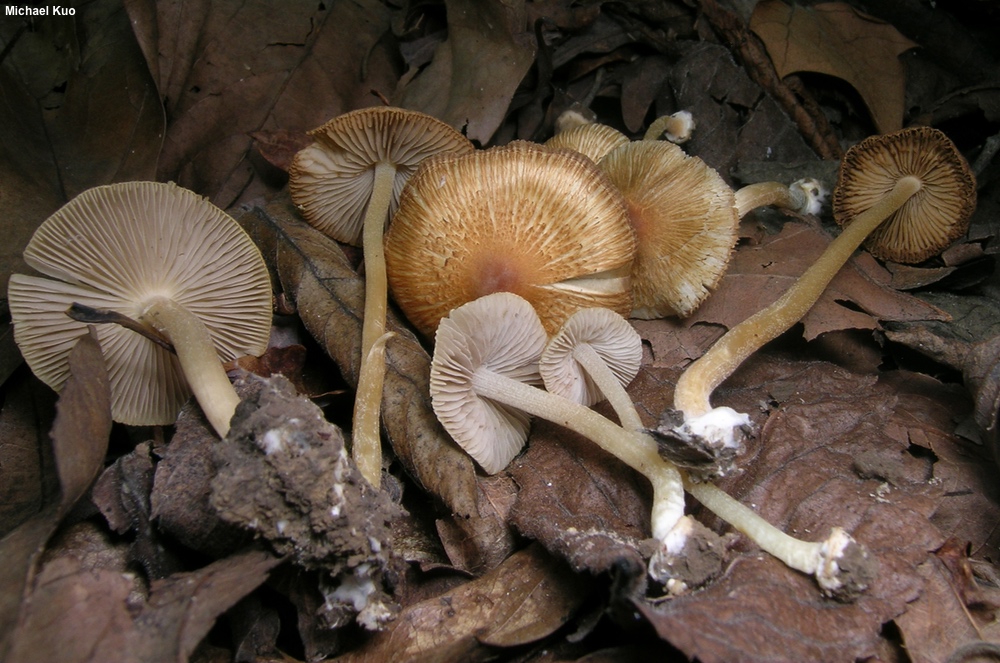
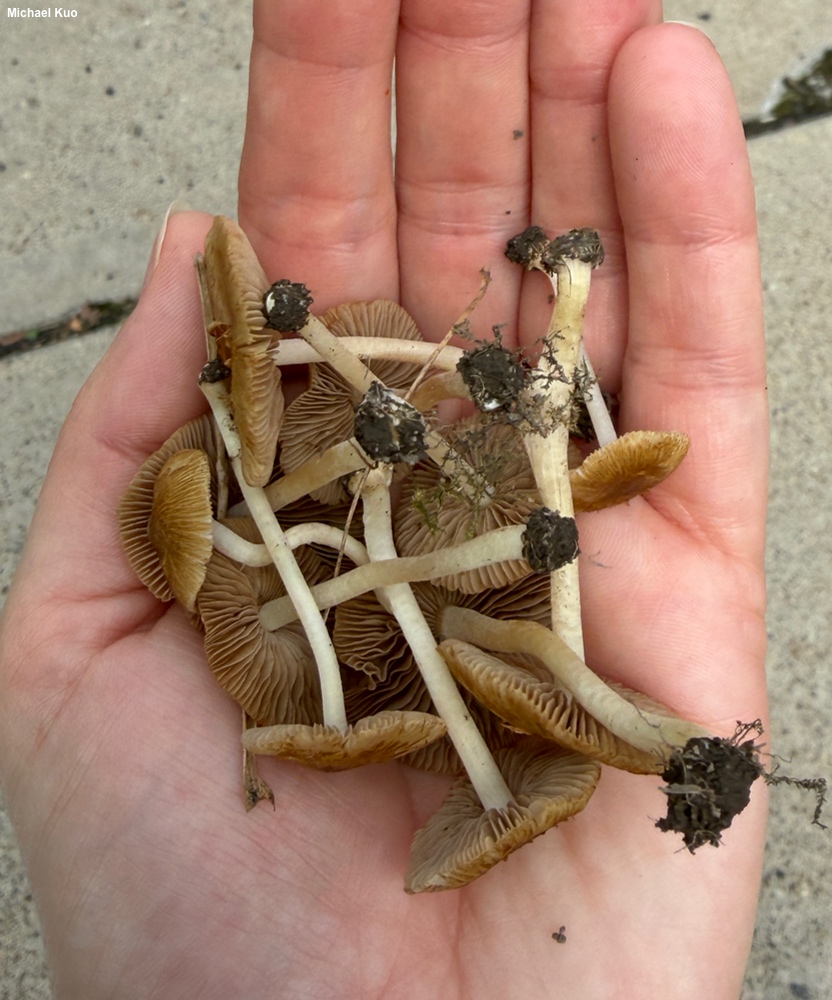
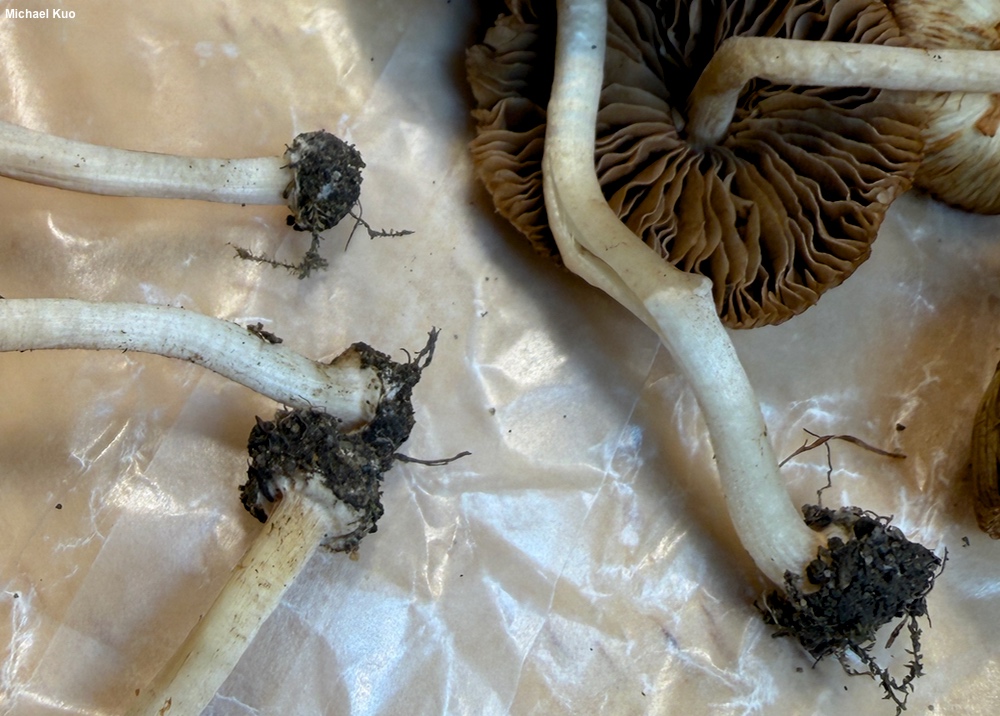
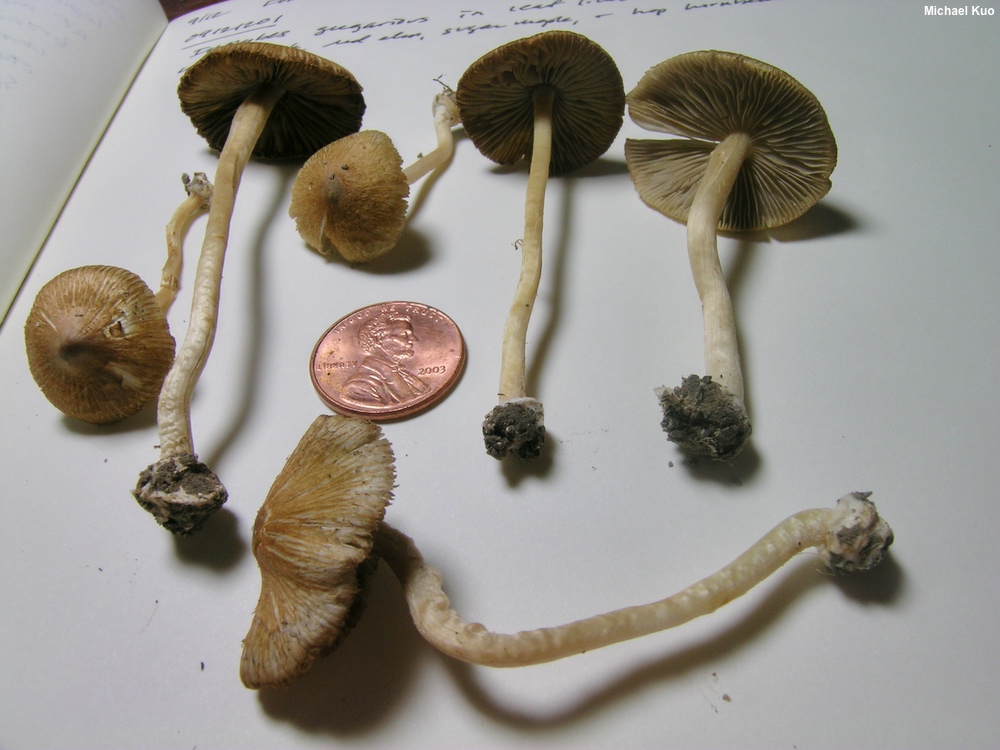
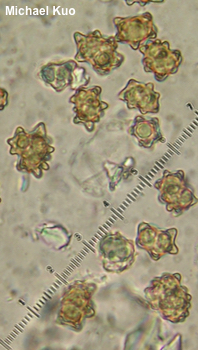
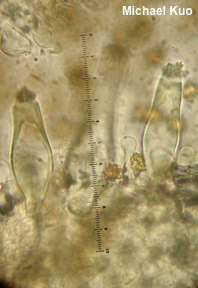
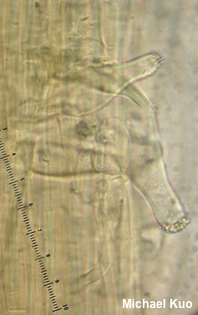
Yes, microscopic analysis is required for confident identification, but these are inocybes, so there's no way around it. This year I found Inocybe communis fruiting alongside Mallocybe unicolor by the hundreds, under very old oaks on the University of Pittsburgh campus, in the shadow of Pitt's iconic Cathedral of Learning. After using Inocybe expert Brandon Matheny's keys (easily discoverable online) to identify the collection, I went through the 77 unidentified Inocybe collections in my herbarium to find potential matches. Based on photos I selected 8 collections, going back a quarter century to 2005, for microscopic analysis; 5 of these matched Inocybe communis. Thus, if my experience is indicative, the species can be tentatively identified through photos (combined with mycorrhizal host information) just over half the time—not a great success rate. Thanks to Joanne and Robert Solem for documenting, collecting, and preserving Inocybe communis for study; their collection is deposited in The Herbarium of Michael Kuo. Description: Ecology: Mycorrhizal with oaks; growing gregariously; summer and fall; originally described from Tennessee (Jakob et al. 2026); probably widely distributed in the Midwestern and eastern United States. The illustrated and described collections are from Illinois, Maryland, Ohio, and Pennsylvania. Cap: 12–35 mm; broadly conic at first, becoming broadly convex with a central bump; dry; finely radially silky-fibrillose, becoming slightly scaly; orangish brown to yellowish brown; the margin splitting in places with maturity. Gills: Narrowly attached to the stem; close; short-gills frequent; pale grayish at first, becoming dull brown; edges whitish. Stem: 35–80 cm long; 2–3 mm thick; equal above a small basal bulb that features a rimmed upper edge; dry; pruinose, especially toward the top; whitish to yellowish; basal mycelium white. Flesh: Insubstantial; whitish; not changing when sliced. Odor: Not distinctive. Chemical Reactions: KOH negative to brownish on cap surface. Spore Print: Pale brown. Microscopic Features: Spores 9–14 x 7–10 µm including nodules; nodulose; angular and irregular; nodules 1–4 µm long, up to 3.0 µm wide at the base; brownish golden in KOH. Basidia 26–30 x 6–9 µm; clavate; 4-sterigmate. Pleurocystidia 65–80 x 15–20 µm; fusiform; smooth, but developing apical crystals; walls 2–5 µm thick; hyaline in KOH. Cheilocystidia similar to pleurocystidia but usually smaller. Pileipellis a cutis with occasional aggregations of upright elements; elements 6–10 µm wide, slightly roughened, hyaline to brownish golden in KOH. Caulocystidia present in sections taken from the lower portion of the stipe; 40–100 x 10–25 µm; fusiform to lageniform; smooth, but developing apical encrustations; walls 1–3 µm thick; hyaline in KOH. Clamp connections present. REFERENCES: S. Jakob & P. B. Matheny, 2026. (Matheny, 2022; Jakob et al., 2026.) Herb. Kuo 09290502, 10040510, 05120602, 07140802, 09121201, 07181612, 07091901, 08162603. This site contains no information about the edibility or toxicity of mushrooms. |
© MushroomExpert.Com |
|
Cite this page as: Kuo, M. (2026, August). Inocybe communis. Retrieved from the MushroomExpert.Com Web site: http://www.mushroomexpert.com/inocybe_communis.html |