Hygrophoropsis aurantiaca
Scientific name: Hygrophoropsis aurantiaca (Wulfen) Maire
Derivation of name: Hygros means "moisture" or "wetness,"
phoros means "bearing" or "carrying," and opsis means
"resembling" or "similar to."
Hygrophoropsis, then, means
"resembling Hygrophorus." Aurantiaca means
"orange-colored."
Synonyms: Cantharellus aurantiacus (Wulfen) Fr.;
Clitocybe
aurantiaca (Wulfen) Fr.
Common name(s): False chanterelle
Phylum: Basidiomycota
Order: Boletales
Family: Hygrophoropsidaceae
Occurrence on wood substrate: Saprobic; single to grouped
or scattered on the ground under conifers and on decayed
conifer
wood and other conifer debris;
summer through fall.
Dimensions: Caps 2.5-9 cm wide; stipes 2.5-10 cm long and
0.5-1.5 cm thick.
Cap: Smooth to minutely velvety; color variable but usually
orange-yellow
to orange-brown,
darker in the center.
Gills: Decurrent, thin but with blunt edges, repeatedly forked;
pale yellow-orange
to bright orange..
Spore print: White.
Stipe: Central to eccentric; dry; finely hairy; often curved;
pale yellow to orange.
Veil: Absent.
Comments: Called the false chanterelle due to its
resemblance to Cantharellus
cibarius, a true chanterelle.
Cantharellus cibarius, however, has
decurrent, forked, blunt
ribs and folds instead of true gills and
is more yellowish in
color.
More information at MushroomExpert.com:
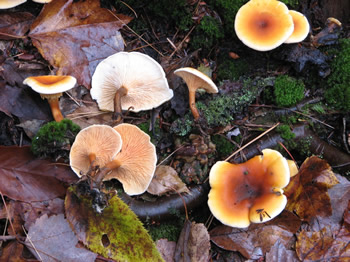
Figure 1.
A field collection of Hygrophoropsis
aurantiaca.
Note the
variation in color and the darker
cap center. Photo © Rick Van de Poll.
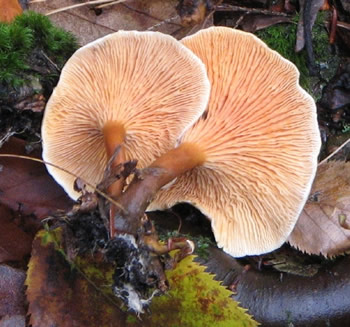
Figure 2. The gills appear somewhat blunt and are
repeatedly forked, a feature better observed in Figure 5.
Photo © Rick Van de Poll.
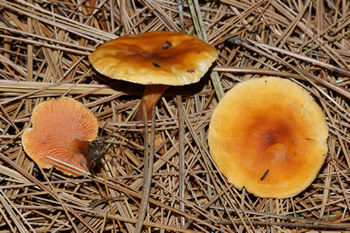
Figure 3. The pine needles indicate a typical habitat for
this species.
Photo © John Pliscke.
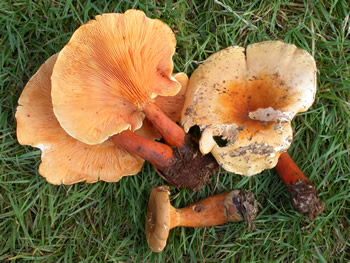
Figure
4. This was a display specimen at the 2011
NAMA foray at Clarion University in PA. The
specimens were placed on grass for the photograph.
Photo © Gary Emberger.
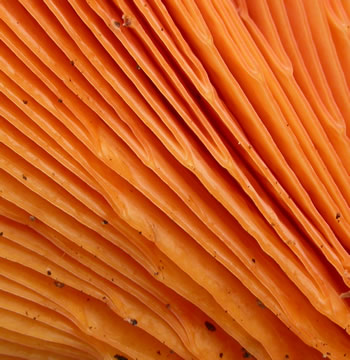
Figure
5. Note the repeatedly forked gills which are
somewhat blunt-edged. Compare to Omphalotus
illudens, a poisonous species that Hygrophoropsis
aurantiaca is
sometimes confused with. Omphalotus
illudens has sharp-edged, unforked gills, and grows in
clusters.
Photo © Gary Emberger.